
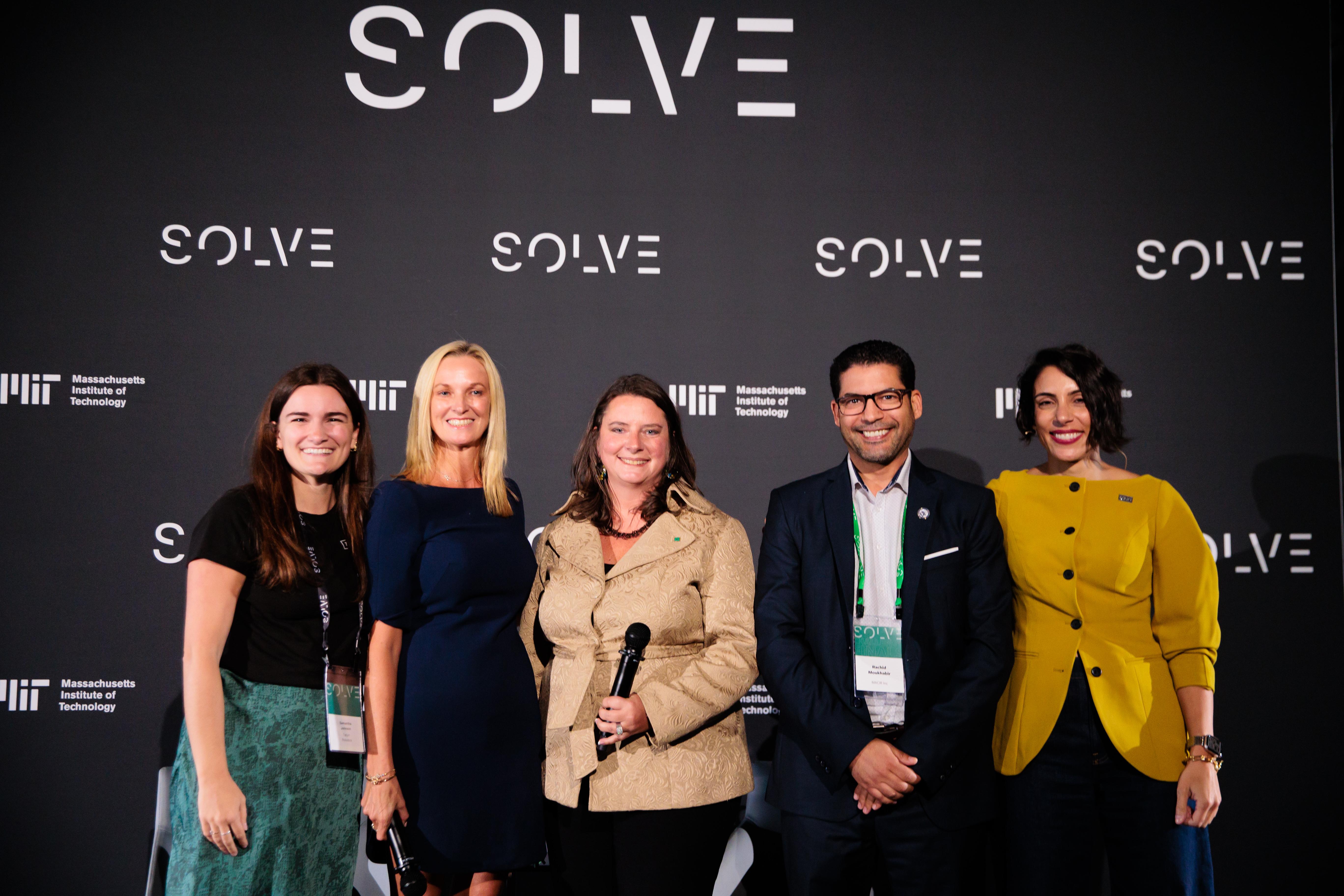
As the nature of work continues to evolve, investing in inclusive, future-ready workforce pathways has never been more urgent. Citizens has made workforce development a core pillar of its community impact strategy by backing innovative approaches that expand access to opportunity, strengthen local economies, and prepare people for the jobs of tomorrow. In this Q&A, Michelle Hecht, Executive Vice President, Head of Corporate Affairs at Citizens, shares how the bank is helping build the workforce of the future, why collaboration is essential to closing opportunity gaps, and what inspired the launch of the Citizens Workforce Innovation Prize in partnership with MIT Solve.
Citizens has a long-standing commitment to strengthening communities. How does workforce development fit into your broader corporate mission?
As a bank with visibility across industries and direct relationships with employers and community partners, Citizens is uniquely positioned to convene public, private, and nonprofit leaders and translate customer and labor‑market insights into targeted and scalable programs.We help people reach their potential by providing tailored financial advice, innovative tools, and community engagement—such as scholarships, financial literacy initiatives, and workforce development partnerships—that empower individuals to achieve their goals and build brighter futures.
In 2024-2025, we committed $10 million to supporting workforce development programs and long-term economic growth. In the next three years, we are doubling that commitment to $20 million in 2026-2028.
You mentioned “building the workforce of the future” during your announcement. What does that phrase mean to Citizens, and why is it so central to your strategy today?
Building the workforce of the future means preparing our colleagues, customers, and communities to thrive in a rapidly changing economy. It’s about creating inclusive pathways to opportunity through upskilling, reskilling, and education, while fostering a culture of adaptability and continuous learning.We invest in career growth, technology, and partnerships with organizations like Junior Achievement, Year Up United, and Education Design Lab to ensure individuals have the skills needed for emerging industries. By combining innovation with inclusion, we aim to strengthen economic mobility, close opportunity gaps, and empower people to succeed in the jobs of tomorrow.
What inspired Citizens to launch the Workforce Innovation Prize in partnership with MIT Solve?
We wanted to empower bold thinkers to help address the biggest challenges in workforce development. The Citizens Workforce Innovation Prize was designed to inspire and scale groundbreaking solutions that can deliver impact, transform communities, and accelerate innovations that prepare individuals for a rapidly evolving workforce.As a super-regional bank with branches coast-to-coast as well as nation-wide products and services, we’re committed to supporting our communities. In April, we convened a panel with local thought leaders on future-proofing Massachusetts and building a resilient innovation economy. The discussion explored how institutions can collaborate to drive economic impact and keep local talent to propel Massachusetts, its businesses, and its people for long-term success.
Our partnership with MIT Solve is an extension of this commitment and both selected solutions, ELEVATE and Tatum T1, this year are local Massachusetts companies using innovation and technology to help transform underserved populations.
As you mentioned, both ELEVATE and Tatum T1 were selected as this year’s prize recipients. What stood out about their solutions, and why are they a strong fit for Citizens’ priorities?
The first year of the Citizens Workforce Innovation Prize had such an outstanding pool of impactful applicants that the original $100,000 award was increased to $200,000.ELEVATE, developed by the Massachusetts Association for Computer and Internet Resources, is a workforce development solution embedded in public libraries to help prepare underserved individuals for today’s constantly evolving digital economy. To meet the needs of the evolving workforce, ELEVATE is building new tools that blend hybrid learning, micro-credentialing, and AI-powered career coaching to create a scalable and sustainable model that helps expand workforce accessibility.
Tatum Robotics has developed a tool to allow DeafBlind workers the ability to participate in meetings real-time, access work emails, and engage face-to-face with customers while still using tactile sign language. The Tatum T1 is a collaborative, cloud-based robot that allows DeafBlind people to access the benefits of a computer without digital accessibility hurdles.
Why is collaboration between corporations, nonprofits, and entrepreneurs so important in closing workforce gaps across the country?
Public-private partnerships act as catalysts for prosperity by connecting employers with skilled talent, promoting growth, and establishing frameworks. These collaborations can boost local economies and help communities prepare for the changing and dynamic workforce demands of today and tomorrow.At Citizens, we focus our partnerships on nonprofits working to enhance educational and career opportunities, address the rapidly changing demands of the modern economy, and strengthen economic mobility. This work integrates job training, wraparound support, and digital skills into programs that lead to in-demand careers and help promote economic mobility. We work with our customers and clients to translate labor-market insights into targeted, scalable initiatives that address business and workforce needs.
Tags:
- Economic Prosperity
- Global Challenges
- Prize
Related articles
-
“Education is the one thing you can take with you.” A Q&A with Rudayna Abdo, Founder and CEO, Thaki

-
Powered by Purpose: E Ink’s ePaper Technology Takes Aim at the World’s Toughest Problems
Because it draws power only when an image changes—and none at all while static—ePaper reduces energy consumption by orders of magnitude. That single breakthrough unlocks net-zero transit signs, off-grid medical notebooks, and other applications that traditional screens simply can’t power sustainably.
-
MIT Solve Launches $1.5M Global Search for Tech-Enabled Social Innovations
The world's leading social impact platform seeks tech innovators tackling global challenges in Climate, Health, Learning, Economic Prosperity, and Indigenous Communities