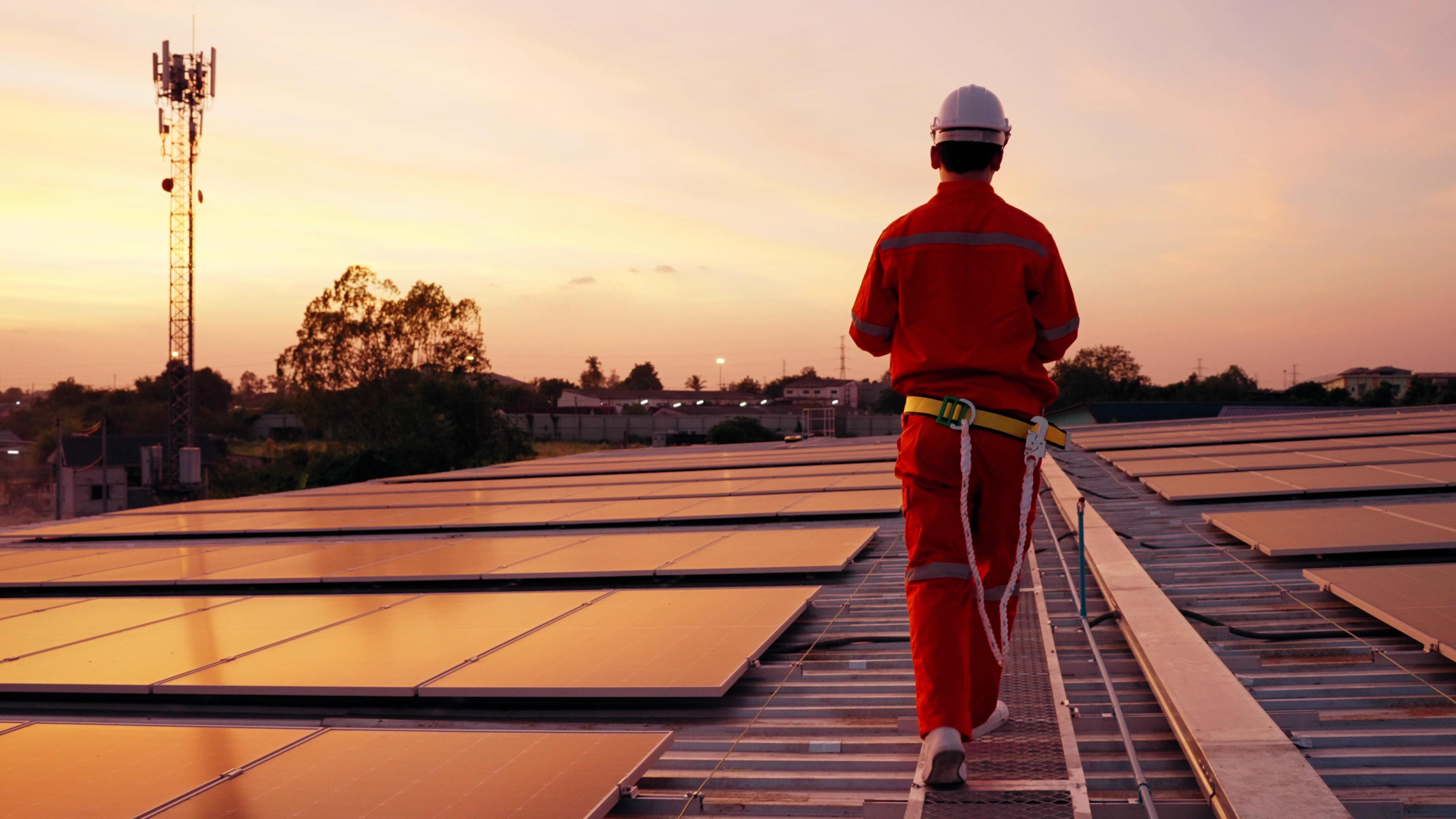
How can we equitably adapt to a warming climate and decarbonize how we live and eat?
Accepting Solutions
Timeline
-
Applications Open
September 22, 2026 9:00am EDT -
Solution Deadline
November 2, 2026 12:00pm EST
Challenge Overview
Even as clean energy deployment and electrification gain momentum, decades of delayed climate action have made adaptation more urgent. with major sources of emissions in food systems, cities, and industry slow to change. Communities are confronting more severe heat, flooding, drought, and wildfire, often with limited resources to establish, protect, or recover essential services. The changes needed to reduce emissions from agriculture and urban areas, such as resilient regional food systems, abundant multi-family housing, and diverse mobility options, remain underfunded and difficult to implement at scale.
Communities navigating these constraints are not passive recipients of climate solutions, but sites of frontier innovation. As aid and public resources become more limited, successful solutions must be designed to demonstrate impact, adaptability, and financial sustainability. This requires solutions that can be built within existing systems, budgets, and infrastructure.
New technologies can help meet these challenges. Robotics can improve monitoring and construction; advances in materials and engineering can restore shorelines and make cooling more efficient; and data tools can improve decisions, from bus operations to ecosystem management. Where innovators use AI, tools must expand local capability and strengthen trusted decision-making, enabling low-carbon systems that protect biodiversity and help communities thrive in a harsher climate.
MIT Solve seeks exceptional solutions that harness technology to address human-focused and difficult-to-solve aspects of the climate crisis. We have a particular interest in 2027 for solutions that:
Shape low-carbon, climate-resilient cities through better construction and retrofitting, inclusive mobility, and more circular materials
Protect people, livelihoods, and essential services from extreme heat, floods, drought, wildfire, or other climate hazards through infrastructure design, resilient water and cooling systems, or risk management approaches
Transform agrifood systems to be climate-resilient, low-emission, or nature-positive, including through stronger regional supply chains
Restore and sustainably use ocean and coastal systems, including fisheries, coastal protection, or renewable energy
Everyone deserves a safe climate and a thriving natural world. Let’s make that a reality, together.
FAQ
Solutions
What type of solutions is Solve looking for?
Solve seeks innovative, human-centered, tech-based solutions to our Global Challenges. Through open innovation, Solve is looking for a diverse portfolio of solutions across geography and stage of development. We encourage people of all backgrounds to submit applications. MIT Solve adheres to the principles of nondiscrimination with respect to its programmatic activities and does not make any decisions on the basis of race, color, religion, creed, gender, gender expression, age, national origin, disability, marital status, sexual orientation, or any other characteristic protected by law.
What stage should my solution be to be accepted?
You can submit applications at the stages listed below.
Concept: An idea being explored and researched for its feasibility to build a product, service, or business model, including prototypes under development. Until the solution has a functioning prototype, we would still consider it a Concept. Concept-stage ideas are only reviewed under the Indigenous Communities Fellowship.
Prototype: An initial working version of a solution that may be in the process of getting initial feedback or testing with users (i.e. running a pilot). If for-profit, a solution that has raised little or no investment capital. Until the solution transitions from testing to consistent availability, we would still consider it a Prototype. (Often 0 users/direct beneficiaries)
Pilot: The solution has been launched in at least one community, but is still iterating on design or business model. If for-profit, is generally working to gain traction and may have completed a fundraising round with investment capital. (Often 10+ users/direct beneficiaries)
Growth: An established solution available in one or more communities with a consistent design and approach, ready for further growth in multiple communities or countries. If for-profit, has generally completed at least one formal investment round (Seed stage or later). If nonprofit, has an established set of donors and/or revenue streams.
Scale: A standard solution operating in many communities or multiple countries and is prepared to scale significantly by improving efficiency. If for-profit, has likely raised at least a Series A investment round.
How does Solve define technology?
We define technology broadly as the application of science and evidence-based knowledge to the practical aims of human life. We welcome solutions that are using apps, SMS technology, software, AI, robots, drones, blockchain, and virtual reality.! We also welcome solutions that leverage traditional, ancestral, and natural technologies and knowledge systems. Tech-based innovations across our Solver portfolio include plant-based solutions that reduce the effects of climate change, machine-learning platforms that improve the delivery of justice and governance, biodegradable sanitary pads, and solutions that leverage centuries-old irrigation or building techniques, to name a few. Learn about all our Solver teams' diverse technologies.
My solution was already selected for a previous Solve challenge. Am I eligible?
If you or your organization has been selected as a Solver for a Global or Custom Challenge in the past, including as an Indigenous Communities Fellow, you may still apply, but your solution must be new. It cannot be the same solution that was previously selected by Solve. Reach out to help@solve.mit.edu if you have any questions about your eligibility.
Selection Process
How do I apply?
Review our How to Apply to a Challenge webpage for tips and tutorials to get you started.
Can I submit multiple solutions or apply to multiple Challenges?
One team lead, solution, or organization can apply to multiple Global Challenges if there is alignment. However, if you advance beyond the initial judging rounds in multiple Global Challenges, you will be asked to select one challenge in which to advance.
A team lead cannot submit multiple solutions to the same Global Challenge. However, we encourage you to look at other open custom challenges on our site. You can apply to as many of these as you fit the application criteria for! Note that the resources offered to winners of Custom Challenges vary from the Solver program associated with the Global Challenges.
How will my solution be evaluated?
First, Solve's staff and community will conduct an initial screening. Secondly, expert reviewers will evaluate and score the solutions according to Solve’s judging criteria, and the solutions with the highest scores will pass to the semifinalist round. Challenge Leadership Group judges (experts and leaders from across industries and sectors) will evaluate and score the solutions. The highest-scoring solutions will become finalists. They will be notified in February and invited to a virtual live pitch and Q&A session, after which the judges will deliberate and select the Solver class.
Solutions will be evaluated along the following criteria:
- Alignment: The solution uses technology to address one of Solve's Global Challenges.
- Potential for Impact: The planned solution implementation has the potential to impact the intended population.
- Feasibility: The team has a realistic, practical plan for implementing the solution, and it is feasible in the given context.
- Innovative Approach: The solution includes a new technology, a new application of technology, a new business model, or a new process for solving the Challenge.
- Human-Centered Design: The solution is designed with and for underserved communities, and the solution team demonstrates that they have the experience, relationships, data, and knowledge to develop and deliver a successful solution.
- Scalability*: The solution has a plan for financial viability and the potential to be scaled to affect the lives of more people.
- Partnership Potential*: The applicant clearly explains how the solution would benefit from the broad range of resources that the Solve community is positioned to provide.
- Technical Feasibility*: If the underlying technology is novel, the applicant has provided convincing evidence that it has been built and functions as they claim it does.
*This criterion will only be considered during finalist selection and beyond.
How long will it take to complete the application?
Once you decide you would like to apply to Solve’s 2027 Global Challenges, begin your application as soon as you can. In post-application surveys, most applicants reported that they spent several hours completing the application. Be sure to budget enough time to submit your application before the deadline.
To help you prepare, download a PDF version of the application here. The PDF version is only for reference; you must submit your application online here.
Solver Program
What funding is available to Solvers?
Solver teams receive an average of $40k each following selection and because once a Solver, always a Solver, they will continue to be eligible for funding opportunities during their program year and beyond.
What resources does the Solve program provide?
Funding
- Access to a pool of +$1M in prize funding at selection and additional funding opportunities throughout the program and after.
Nine-month support program
- Tailored capacity-building workshops that may cover marketing, public relations, monitoring and evaluation, business model, and more;
- Leadership coaching;
- Access to in-kind and pro bono resources such as software licenses and legal services;
- Monitoring and evaluation support;
- A powerful network of impact-minded leaders across industries and sectors, including MIT
- Attendance at events throughout the year for opportunities to pitch and connect;
- Exposure in the media and potential speaking opportunities at conferences;
- Connections with current and past Solver teams for peer-to-peer support, inspiration, and learning
What is the time commitment?
Selected Solver teams should expect to commit ~25 hours to the program over the course of nine months, inclusive of coaching sessions, workshops, virtual events, etc. Additionally, attendance to MIT Solve flagship events is four days for Solver Orientation in Cambridge, MA (April) and four days for Solve Challenge Finals in New York City (September).
What happens after completion of the program?
Once a Solver, always a Solver! You will continue to have access to funding opportunities, in-kind and pro bono resources, exposure in the media, and speaking engagements, and you will receive invitations to join Solve in selected virtual and in-person events.
Have more questions?
If you have any additional questions, please review our events calendar to find application clinic sessions, where you can learn more about MIT Solve, the Solver program, commonly asked questions, and Solve's selection criteria.
You can also email your questions to help@solve.mit.edu. Please allow 3-5 business days for a response.
Prizes
MIT Solve - Solver Award
All Solver teams selected for Solve’s Global Challenges and the Indigenous Communities Fellowship will receive a $10,000 grant funded by Solve.
The AI for Humanity Prize
The AI for Humanity Prize is open to solutions leveraging data science, artificial intelligence, and/or machine learning to benefit humanity. The prize is made possible by The Patrick J. McGovern Foundation, a philanthropy committed to advancing AI and data solutions to create a thriving, equitable, and sustainable future for all. Up to $150,000 will be awarded to at least one Solver team from the 2027 Global Challenges.
The Citizens Workforce Innovation Prize
The Citizens Workforce Innovation Prize seeks to accelerate the development of solutions that will prepare people for today’s opportunities and the workplace of future, advance new ways of working, and drive economic impact within communities. Funded by Citizens, the prize furthers the company’s commitment to helping communities meet today’s demands while positioning themselves well for the future. A $100,000 prize will be awarded to at least one US-based Solver team selected for the 2027 Global Challenges.
The Community Catalyst Prize
The Community Catalyst Prize is open to solutions strengthening communities across the United States by expanding financial opportunity or improving housing access and affordability. Eligible solutions might help people increase income, reduce debt, or build savings and credit, or help households stay housed or access quality affordable homes. Solutions must be based in the United States or have active implementation there. Up to $200,000 will be awarded to a team or teams selected for the 2027 Global Challenges, or from Solve's existing portfolio of alumni teams.
The Crescent Enterprises AI for Social Innovation Prize
The Crescent Enterprises ‘AI for Social Innovation’ Prize supports groundbreaking solutions that leverage data science, artificial intelligence, and machine learning to tackle critical global social challenges. Sponsored by Crescent Enterprises - a diversified conglomerate spanning industries such as ports and logistics, power and engineering, food and beverage, life sciences and business aviation - the prize reflects the company’s dedication to innovation, sustainability, and meaningful global impact.
Up to $100,000 will be awarded to as many as four Solver teams addressing the 2027 Global Challenges or selected from Solve’s portfolio of alumni teams. This prize aims to recognise and accelerate the growth of transformative solutions, driving positive change for a better future.
The E Ink Innovation Prize
The E Ink Innovation Prize is open to solutions that address problems of global importance in any of Solve’s areas of impact, with particular interest in sustainability, education, or intercultural understanding. The prize is funded by E Ink, a corporation that advances healthy solutions and a sustainable future using ultra-low power, daylight readable displays. $100,000 will be awarded to one Solver team selected for the 2027 Global Challenges. E Ink may also opt to provide materials and technical support to its prize recipients if they plan to use ePaper materials.
The Morgridge Family Foundation Innovation Prize
More details coming soon
Philips Foundation Social Impact Award
The Philips Foundation Social Impact Award is open to scalable solutions that improve access to quality healthcare in maternal and child health and cardiovascular disease for underserved communities. The award reflects Philips Foundation's mission to enable equitable healthcare access globally through meaningful innovation, strategic partnerships, and catalytic funding. $100,000 will be awarded to one scale-ready solution selected for the 2027 Global Challenge or from Solve's portfolio of alumni teams.
The Prince Albert II of Monaco Foundation Ocean Innovation Prize
The Prince Albert II of Monaco Foundation Ocean Innovation Prize is open to solutions supporting innovation for coasts, oceans, and the broader blue economy. The prize is funded by Prince Albert II of Monaco Foundation, which is committed to protecting and progressing planetary health. Up to $100,000 will be awarded to one Solver team.
The Schmidt Marine Wavemaker's Prize
The Schmidt Marine Wavemaker's Prize is open to scale-ready solutions that use innovative marine technology to restore and protect the health of the world's oceans. The prize is funded by Schmidt Marine Technology Partners, a program of the Schmidt Family Foundation which helps move promising marine technology ideas toward economic sustainability and global impact. Up to $100,000 will be awarded to one team selected for MIT Solve's 2027 Global Challenges.
The Seeding the Future Prize for Climate-Positive and Equitable Food Systems
The Climate-Positive and Equitable Food Systems Prize, sponsored by the Seeding the Future Van Lengerich Foundation, recognizes high-impact innovations that advance equitable, resilient, and climate-positive food systems worldwide. The Seeding the Future Foundation is a nonprofit organization that seeds and supports scalable, high-impact initiatives that advance sustainable food systems and equitable access to safe, nutritious, and trusted food globally. A prize of $150,000 will be awarded to at least one Solver team selected for MIT Solve's 2027 Global Challenges.
Application Clinics
Join one of our application clinics to get your questions answered and learn more about MIT Solve, the Solver program, commonly asked questions, and Solve's selection criteria. You can find the links to all upcoming clinics below.
If a clinic date has already passed, you can watch the recording by clicking the link for that session.
- September 29 -10am ET - English
- October 6 - 9am ET - French
- October 6 - 2pm ET - English (focused on Indigenous Communities Fellowship)
- October 8 - 10am ET - Spanish
- October 14 - 11am ET - English
- October 21 - 3pm ET - English (focused on Indigenous Communities Fellowship)
- October 26 - 11am ET - English
- October 27 - 7am ET - Arabic
Judging Criteria
- Alignment with the Challenge: The solution addresses the challenge that has been set forth using technology.
- Potential for Impact: The planned solution implementation has the potential to impact the intended population.
- Feasibility: The team has a realistic, practical plan for implementing the solution, and it is feasible in the given context.
- Innovative Approach: The solution includes a new technology, a new application of technology, a new business model, or a new process for solving the Challenge.
- Human-Centered Design: The solution is designed with and for underserved communities, and the solution team demonstrates that they have the experience, relationships, data, and knowledge to develop and deliver a successful solution.
- Scalability: The solution has a plan for financial viability and the potential to be scaled to affect the lives of more people.
- Partnership Potential: The applicant clearly explains how the solution would benefit from the broad range of resources that the Solve community is positioned to provide.
- Technical Feasibility: The applicant has provided convincing evidence that the data/analytics underpinning the solution have been built and function as they claim they do, even if only proof-of-concept.
Challenge Leadership Group
Maria Netto
Joanne Peter

Karthik Ganesan