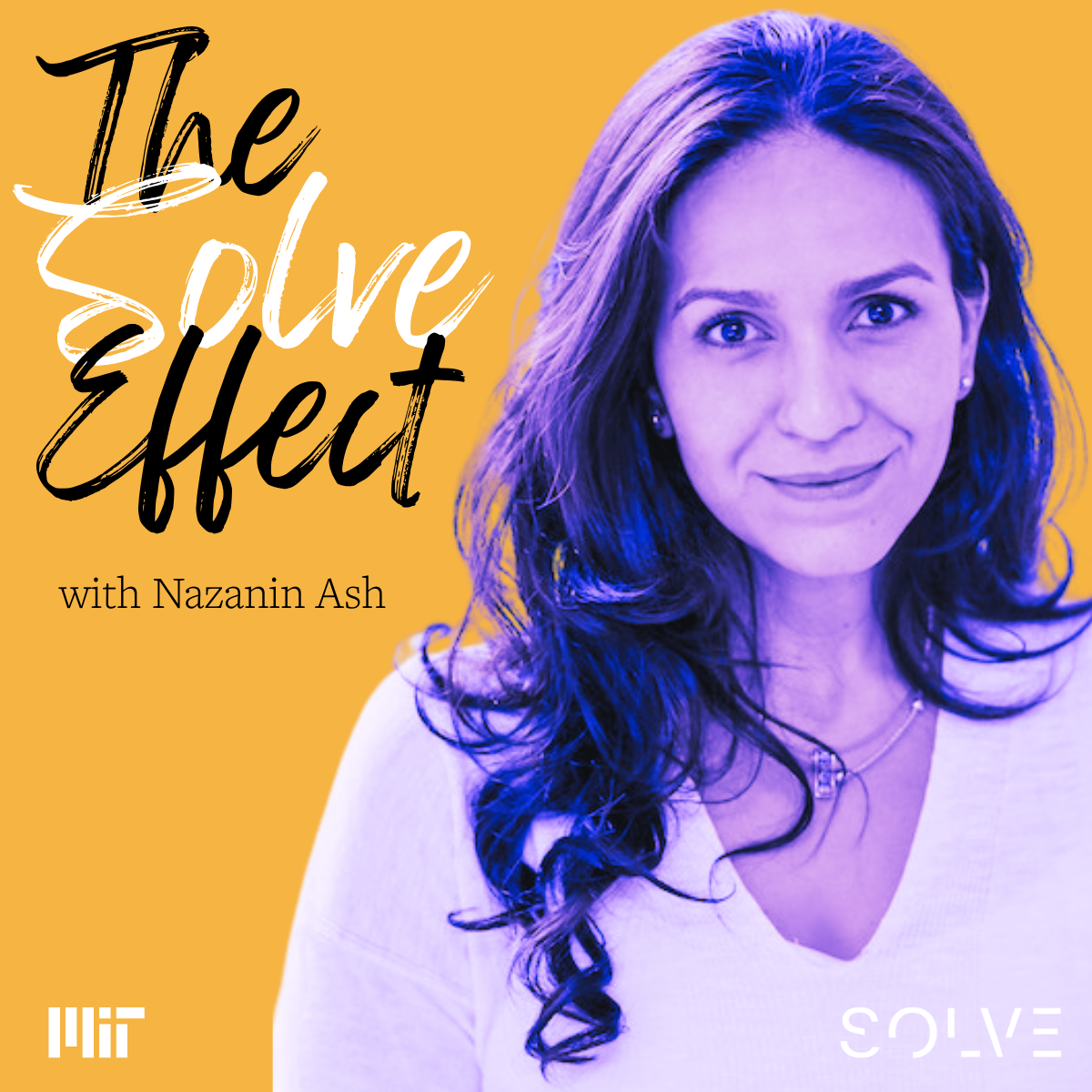
This is a transcript of Episode Seven of The Solve Effect, edited and condensed for clarity. Listen on Spotify, Apple Podcasts, Amazon Music, or iHeart Radio.
Hala Hanna
When people leave their home countries, whether in search of opportunity, a sense of belonging or safety, their journey is just beginning. The question of who will welcome them to their new home can shape their lives for decades to come.
Nazanin Ash is the chief executive officer of Welcome.US. It's a national initiative that mobilizes Americans to welcome newcomers who are seeking refuge in the United States. And in just three years, under her leadership, Welcome.US has mobilized 2 million sponsors in all 50 states across 12,000 zip codes, helping close to 800,000 newcomers make the U.S. home.
I am so delighted to welcome Nazanin to the show.
So I want to start by addressing the moment and quoting President Trump's speech from the United Nations General Assembly in September. He said, “We have reasserted that America belongs to the American people.” Of course, coupled with the anti immigration raids, this is a different world than what is depicted on your home page. How does this sit with you?
Nazanin Ash
Part of the reason that I often refer to Welcome.US as welcome dot us is because our mission is as much about us and what we want to express as Americans and who we are as Americans as it is about the newcomers that we're privileged to welcome here. The true narrative of America, and what we mean by America is for Americans, is that we are this extraordinary experiment in a pluralist democracy. We're this extraordinary experiment of a nation coming together across differences of race, religion, creed, ethnicity, any, you know, identifier you might want to label, and instead a nation that came together around a belief in human dignity, in freedom, in self-determination. So I choose to interpret that statement, "America is for Americans," I choose to interpret that statement as those Americans being the rich, diverse tapestry that we have created together of people from all over the world.
HH
You know, in one generation, you become truly, fully American. The U.S. has been engaged in a pursuit that most countries in history have not been interested in pursuing, which is to be a country that is generally made of all countries. What a radical idea that anybody can become of it. For me, that's American exceptionalism.
And that we come here fully intended to adapt, but also to add. And this is where I want to hear how everything that you just said and all those very deep American values, how does that translate on the day-to-day with the work that you do at Welcome.US?
NA
We launched in the crucible of the evacuation from Afghanistan. When the United States faced this extraordinary challenge of resettling 80,000 Afghan evacuees on a refugee resettlement system, the government's formal, traditional system that, in the previous year, had resettled just 11,400 refugees.
Our belief was that if we opened up the opportunity to help to everyday Americans, to our rich civil society organizations, including our service organizations, our Rotaries, our Lions Clubs, our faith organizations, our veterans groups, and if we opened it up to the innovations of the private sector to help us do rapid systems innovation, we would be able to find the capacity we needed to welcome our new neighbors safely and well, and as you said at the outset, with what they needed to thrive alongside their new communities. So we began this process of creating both policy openings and then the systemic and civic infrastructure that would allow for more Americans and more American institutions to help.
HH
And those system changes and innovations, tell me about a few of them.
NA
A big part of what we did was imagine this from the start as a deep partnership between government and the private sector, civil society, and everyday Americans. And a core part of our belief was only rely on government to do what only government could do.
For example, only government could create the policy openings so that Americans could participate, right? Like make it possible for Americans to serve as private community sponsors of newcomers coming to the United States. We funded an infrastructure of community organizations across 40 states that were deeply knowledgeable about integration services in their local communities and could help support newcomers and sponsors as they continued on their journey as new Americans.
And we worked with technology companies to design online tools and resources that could rapidly allow this volunteerism and civic engagement to scale, where people could get all the information they needed. They could be facilitated in submitting their applications. They could find all the tools and resources to fulfill their duties as a sponsor. They could be in community with each other. And if they needed to, they could be matched with a newcomer who was seeking safety. And it was the private sector that helped us build all of that technology with all of the sort of the deep user experience that is atypical for many nonprofits, and especially when our user in this instance was the welcomer.
HH
Say more about that.
NA
I think it's one of the most distinctive aspects of our work. You know, our programs, our innovations scale, and the number of newcomers we're able to serve and their success in thriving and having the support they need scales if we're able to scale American participation. One of our innovations was: we believe Americans can do this work, and it's grounded in my own experience.
Thousands of newcomers arrive to the United States every year, and they have agency, and they make it. And if they've got a friend and a guide and someone who's helping them navigate their new community, their new country, their new culture and language…. amazing. We believed in newcomer agency, and we believed that Americans had the quote-unquote expertise. They had everything newcomers might need to thrive even more and even more quickly with that community support, but the success of that idea relied on making it easy for Americans to participate.
HH
So you scaled through networks, partnerships, and technology. You went to every person or every sector to what they do best, the private, the nonprofit, the government, and then the communities. It's a very Adam Smith specialization. And then I love what you said, which is a very, in some ways, a very tech principle of decreasing friction. And then of course, anyone who's participating is getting more than they’re actually giving from how it feels to take part. What a way to shift perspective. What are some things that you've learned from some of those stories? Is there a story that particularly stands out to you?
NA
I had a sponsor share a story once, a sponsor in Fort Wayne, Indiana, who sponsored a family from the Congo, because ultimately these programs were broadened to many populations from around the world. And she tells this story about how Mashak, you know, the father of the family that she sponsored, was walking her back to her car after he had come to visit. And he threw out his arms and said, "I'm free."
Like, yes, that's what we have to offer as Americans. Sponsorship distributed the arrival of newcomers. So when it was limited to government pathways and to organizations receiving government contracts, I'll just say, you can imagine it was concentrated in blue cities and it was concentrated in places where there were already diaspora communities. Sponsorship meant that any American anywhere could sponsor. And one of the things I loved about the matching platform that we created is you saw sponsors competing with each other. Can you imagine? Competing to welcome. Competing to welcome. Pick me, pick me. My community has this to offer.
What agency in this moment of fear and displacement and what will my future hold to be able to see like people waiting for them with open arms, like pick me, right? So the bottom line is, it distributed the arrival of newcomers all over the country. We have these amazing maps—
HH
I've seen the maps. We will link to them because it's really incredible.
NA
It distributed the benefit of welcoming. I'll call it, everywhere in the country. And you had these towns who have been losing population year over year. And now it's been reinvigorated. And so if you're a small business that's committed to your town and you're facing these depopulation challenges, like suddenly small businesses were getting involved and then they're going back to the sponsor, and they're like, can we do more of this? Can we invite more people to come to our community? And many of those original sponsors ended up starting their own local nonprofits. Iowa Nice, Carolinians for Ukraine, Patchwork Indy. Like they started developing their own nonprofits so that they could continue to welcome at scale because it was contributing so much to their communities.
HH
Okay, we're going to redirect Welcome.US to Belong.US.
NA
That's a really good idea! Yes!
HH
Because that's what you're doing. You're making everyone belong and those who already belong, belong some more and feel that.
NA
They belong some more. We're knitting, we're knitting our amazing diverse American tapestry together. And isn't that what we need right now to shore up the foundations of our extraordinary radical idea of a pluralist democracy?
HH
Why do you do this work?
NA
My parents came to the United States as exchange students from Iran. They intended to study and then return home. They had me accidentally; in fact, they were on strict orders from their parents not to start a family while they were finishing their studies. And therefore, I was a secret from my grandparents for the whole first year of my life. But they had me. And the Iranian Revolution happened literally on the day my dad was defending his dissertation.
Everything was thrown into the air. They were incredibly worried about their family at home. They were totally, you know, they saw the future they imagined, you know, dissolve before their eyes. They were incredibly worried about me and what my future was going to look like. And you only have to look at what's happening with Iranian women today in Iran to know what that would look like. And so they made a really difficult decision to stay and to rebuild entirely.
And it was my dad's Jewish dissertation advisors who wrapped their arms around us, and I can only imagine, borne from their own experience of displacement. And then, I was allowed to express my human potential.
And back to something you said at the beginning, I am so amazed that in one generation, even though my family is from a country that has been the sworn enemy of the United States, like no diplomatic relations even, for over 40 years, I can be seen and accepted as so American that I was able to work at the highest levels of government. I was even able to represent the United States to the Middle East. I was the Deputy Assistant Secretary for Political and Economic Reform in the Middle East.
HH
If I were to drive to Gaza, it would take the amount of time it takes to drive to New York from Boston, five hours. And so I could have been born five hours south. My two kids, three and six. They might not be here. And so I think that's why we do the work we do.
NA
That's why we do it. We're the country that believes that your human potential shouldn't be limited by your race, your ethnicity, your gender, your religion, or your geography.
And so if we can't do it here, we're not going to be able to do it anywhere. And what we're trying to do is model an approach of mutual flourishing that is a triple win for everyone.
HH
I love that mutual flourishing because it is such a self-selected group, you know, to be an immigrant, it's a radical act of human adaptation. You have to have the imagination to know there's something more for you out there, to believe it, to take action on it, to take the risk. And then once you arrive, you've left everything that's familiar behind, not just your physical relocation, it's the reimagination of self.
And you know, I'm your parents in the story, moving alone on my first transatlantic flight, and then arriving here in 2006, my one luggage, which of course had, the little cash I had, because that was my first flight. So I didn't know that you can't not get your luggage when you arrive. And so I didn't have my luggage for a week. I had to sleep on campus. And it's because of distant family friends who helped me figure out, you know, getting a bank account, the head of international student service, shout out to Fanta Aw, who offered me my first job in the US. These are the folks who give you a real shot. And as I've heard you say those words, it changes your trajectory for decades to come.
NA
And who benefits? Who's benefiting, Hala, when you are in this role, unleashing so many innovators and entrepreneurs? You know, like mutual flourishing. We as a country have the opportunity to make that kind of generational impact in people's lives. And then we, as Americans, reap the extraordinary benefits.
HH
So in this time of uncertainty, of complexity, of political instability, how do you stay grounded? How do you replenish? How do you keep pushing and striving?
NA
Because Americans inspire us.
Our traditional publicly funded refugee resettlement program has resettled on average just 70,000 people a year for the last 30 years, right? When we flipped the switch and gave Americans this opportunity to welcome, Americans welcomed five times that number in a single year. And it massively reduced the numbers of people arriving spontaneously at the border. Because who wouldn't want to take an authorized pathway that's safe, that's secure, where you're met at the airport, where you have support in your community instead of taking a dangerous journey for an uncertain outcome and an uncertain future?
HH
And you've done this. I mean, you have unleashed this. And you've served in so many very senior roles. As you were just sharing, all of these were focused on creating systems that would deliver real opportunity and equality for displaced communities. I would love to hear how those roles prepared you for this one, and maybe also how your understanding of what leadership is changed over time.
NA
Yeah, when I came first to the State Department, I came because I had been living and working in Kenya, working for an amazing organization, for Action Aid Kenya, at a time when they were trying to respond to an HIV AIDS crisis that was overtaking the country.
And then I had this opportunity to do a fellowship program with the United States government on the startup of the emergency, The President's Emergency Plan for AIDS Relief, the Bush administration's large-scale intervention to do something about HIV AIDS. And that's what I mean by like a privilege to see the power or the transformative power of what can happen when you use the levers of superpowers to lean in and solve these global challenges.
But I've also seen the limitations. I was in the Middle East Bureau post the Arab Spring. I was watching the emergence of this population of Syrians who were being displaced by violent conflict in their country and by direct targeting from the Syrian regime. And I was watching what was happening in Lebanon, and Jordan, and Turkey, and seeing how fragile the political and economic foundations were in those countries as they were receiving large numbers of refugees under emergency circumstances, right? Which is to say, not planned, not orderly, because they're supporting people in crisis who are literally fleeing for their lives.
Government systems just couldn't muster what needed to be mustered at the scale and at the speed and with the innovation that was required to appropriately respond to both the needs of refugees and the needs of receiving communities.
And so this idea of turning to civil society, turning to the private sector, turning to massive numbers of institutions of every type who had never been asked to help solve this problem…turns out that was at least one of the important keys to the solutions we need going forward. Systems catalyzing. It's us. Always think that you could have the answer. Don't ever think that those answers are going to come from someplace else.
HH
Beautifully said.
Thank you for taking so much of your time, for sharing with us so much of yourself. Eight hundred thousand people are so lucky that you're the one doing this work.
NA
Collective power is so amazing. I mean, it's a true thing. We shouldn't lose faith in it.
HH
Collective power. That is every one of us listening right now.
You know, this reminded of how pivotal the moment of welcome is, when someone decides to open their door, their community, their heart.
It’s a radical act of belief in our shared humanity and in the promise that dignity doesn’t stop at geography. Through millions of Americans choosing to help their new neighbors, Welcome.US is showing what’s possible when we turn compassion into infrastructure.
I’m Hala Hanna. Thank you for joining us for this episode of The Solve Effect.
This episode was produced by Bridget Weiler and Elisabeth Graham, with audio engineering and editing by Chris McDonnell. Theme music by Max Natanagara. Subscribe or leave a review wherever you get your podcasts. Visit solve.mit.edu or find us on social media.
Tags:
- Podcast
Related articles
-
Stacy Brown-Philpot on TaskRabbit, Trust, and Doing Hard Things
-
Bonus Episode: LIVE from Solve Challenge Finals 2026
Go behind the scenes at Solve Challenge Finals in this bonus episode of “The Solve Effect.”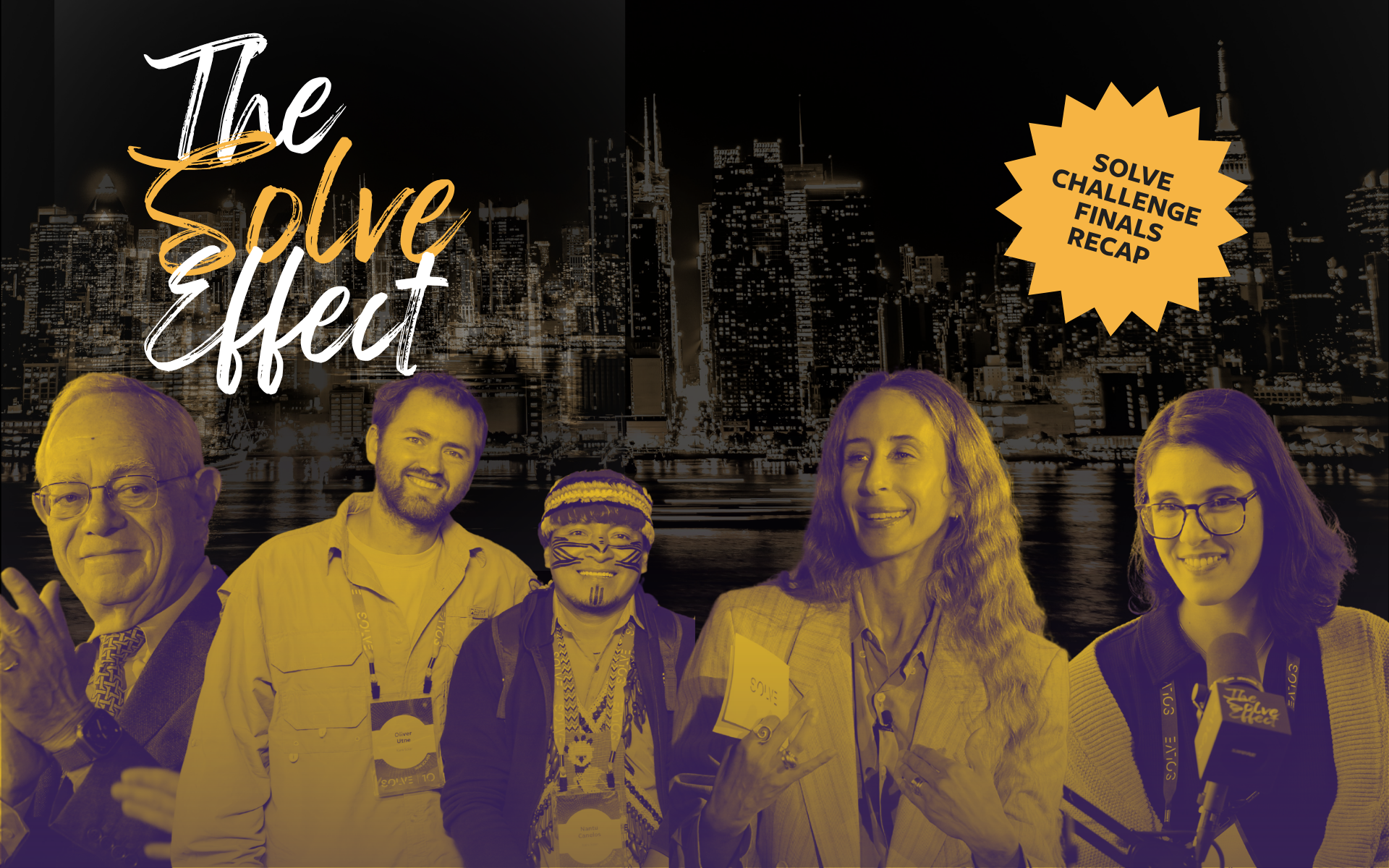
-
10 Years, 10 Solvers: From 14 Days to Under 60 Minutes—Revolutionizing Radiology Reporting with Rology
Ask Amr Abodraiaa what Rology looks like from the patient's side, and the answer is: nothing at all. Invisibility is the design goal. What the patient gets is the result.