Who should apply?
Who should apply?
This track is designed for students in Grades 6-12 (ages 11 and up). Solutions should be designed by student teams, but the application must be submitted by the team’s adult representative (the educator, mentor, or adult facilitator who is overseeing the submission and ensuring safe, ethical AI use). Teams may include any number of students, but only five students and one adult per team will be given an all-expense paid trip to Boston, Massachusetts in July 2026 if selected. For a team with greater than five members, other team members will be given certificates for being part of the winning teams but will not be able to participate in the final presentation at MIT.
This track is open to students from public, charter, private, parochial, independent, and homeschool and after school settings in the United States.
How many students can be on a team?
We suggest having teams of 2-5 students. For each winning team: only five of the student team members and one adult will be given an all-expense paid trip to Boston, Massachusetts that weekend. Other team members will be given certificates for being part of the winning teams but will not be able to participate in the final presentation at MIT.
Note: Travel will be arranged in coordination with Day of AI, and meals will be provided at designated times throughout the weekend.
What counts as Artificial Intelligence?
Artificial intelligence, n. a program made by people that makes computers do things that seem intelligent (or smart) in the same way that humans are intelligent. AI is a broad field that includes related concepts such as Generative AI, Large Language Models (LLMs), Machine Learning (ML), Natural Language Processing (NLP), Computer Vision, and more.
Your team may use any kind of AI, and you can use it in any part of the solution. Your team’s solution must demonstrate a thoughtful and reasoned approach to how AI can be applied to solving the problem.
Educators: we suggest reviewing the ‘What is Artificial Intelligence?’ curriculum from Day of AI.
My team needs help deciding how AI can be integrated into the solution, are there resources available?
Yes! Please review the following resources to help teams consider how they might incorporate AI into solutions:
What topics can my team’s solution address?
This track accepts student-led solutions that utilize AI to improve their communities and the broader world. Solutions may focus on any social, environmental, or economic need, including:
- Taking action to combat climate change and its impacts (Climate)
- Improving financial and economic opportunities for all (Economic Prosperity)
- Improving healthcare access and health outcomes; and reducing and ultimately eliminating health disparities (Health)
- Improving learning opportunities and outcomes for learners across their lifetimes, from early childhood on (Learning)
See more examples under Dimension Examples.
How will my team’s solution be evaluated?
Judges will review each application and score the solution on the following criteria:
- Potential for Impact: The planned solution implementation has the potential to positively impact communities locally and/or globally.
- Feasibility: The team has a realistic, practical plan for how they would implement the solution in the communities where they plan to work.
- AI Approach: The solution demonstrates a thoughtful and reasoned approach to how AI can be applied to solving the problem.
- Human-Centered Design: The solution is designed with and for target communities, and the solution team demonstrates that they have the necessary experience and knowledge of those communities to develop a successful solution.
- Scalability: The solution has the potential to be scaled to affect the lives of people beyond the target communities.
How does the selection process work?
After the submission deadline, applications will go through several rounds of review between March and April 2026, including a screening round by Solve staff, a review round by Solve staff and external reviewers, and a review round by a panel of expert Judges.
Winning teams will be notified by April 24, 2026, and invited to attend America’s Youth AI Festival on July 17-19, 2026 on MIT’s campus in Cambridge, Massachusetts.
How do I submit my team’s application on the Solve platform?
The team’s adult representative (educator, mentor, or adult facilitator who is overseeing the submission and ensuring safe, ethical AI use) must submit the application on behalf of the student team. The adult representative may consult Solve’s How To Apply page for information about submitting the application.
All applications must be submitted via the Solve platform by the deadline (Friday, March 20, 2026 at 12:00pm ET).
What will my team get if our solution is selected?
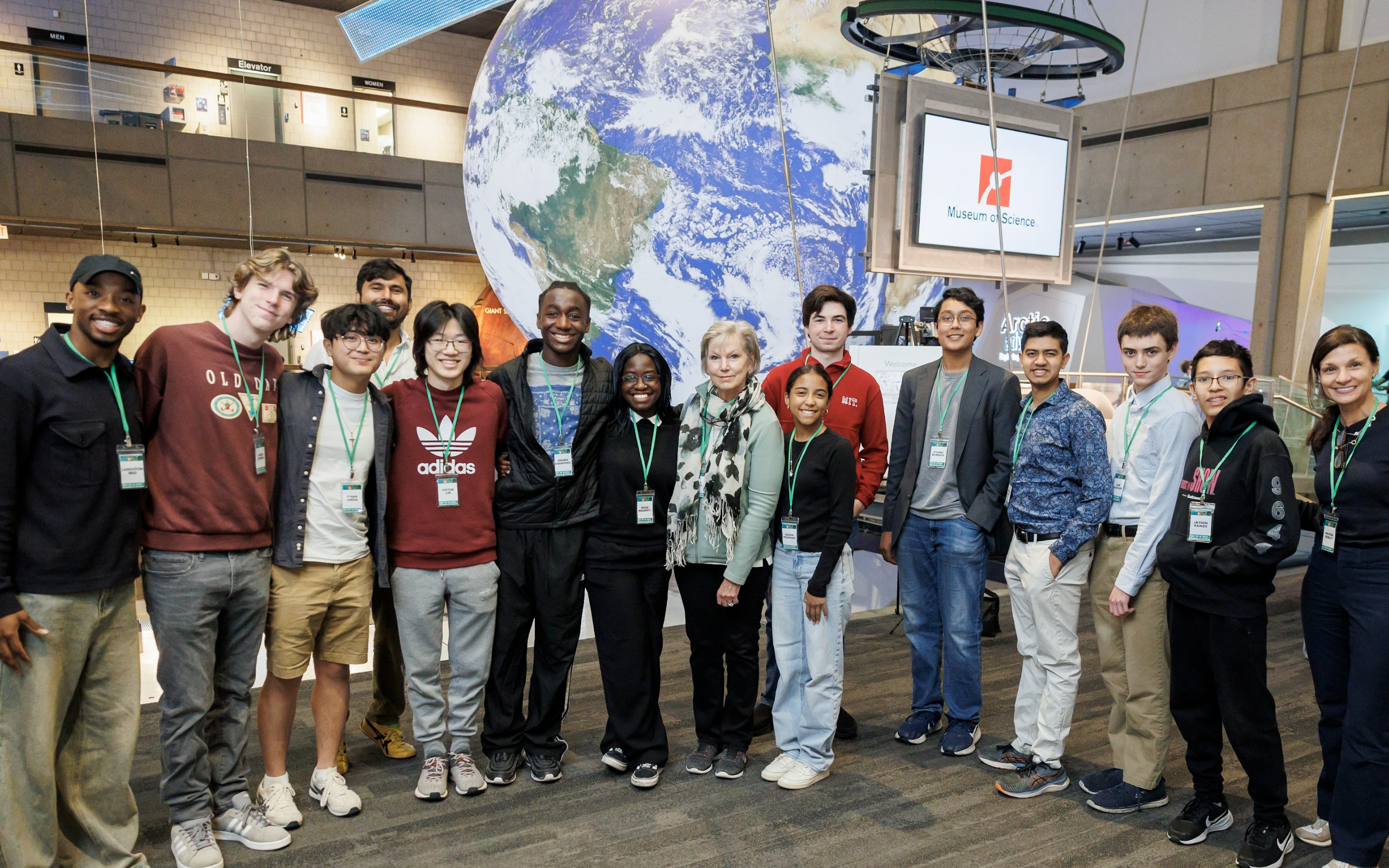
Five student teams will be selected as winners and invited to America’s Youth AI Festival on MIT’s campus on July 17-19, 2026. These winning teams will present their solutions during the AI for a Better World session to an audience of fellow students and attendees. The teams will receive feedback from select Judges during the event.
For each winning team: only five of the student team members and one adult will be given an all-expense paid trip to Boston, Massachusetts that weekend. Other team members will be given certificates for being part of the winning team but will not be able to participate in the final presentation at MIT. Note: Travel will be arranged in coordination with Day of AI, and meals will be provided at designated times throughout the weekend.