Challenge Overview
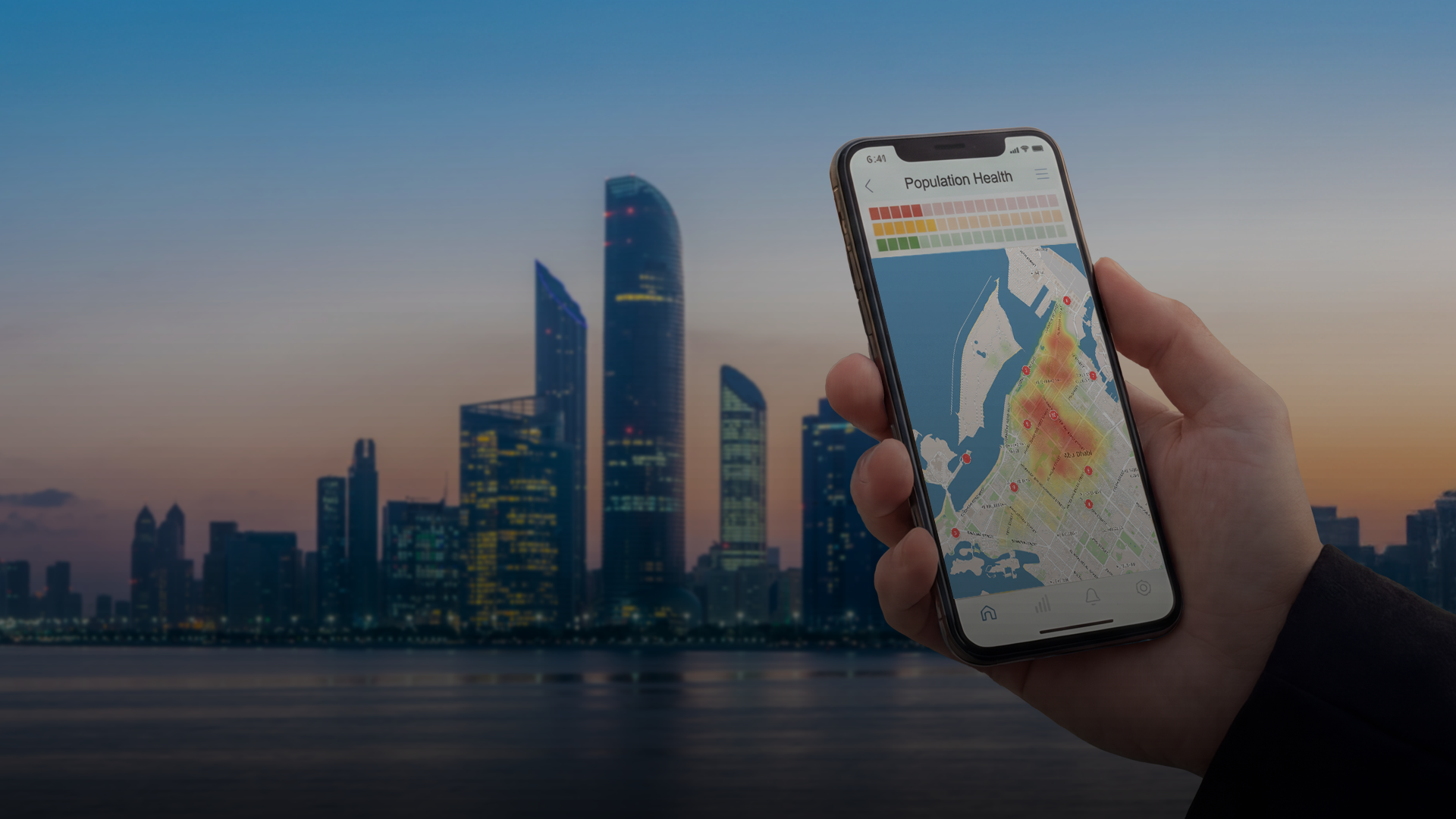
The world faces accelerating health challenges, from non-communicable diseases to the impacts of climate change and emerging infectious threats. Currently, an estimated 4.5 billion people lack access to essential health services, placing immense strain on health systems already burdened by funding gaps and workforce constraints (WHO, 2024, World Bank, 2023). To help meet these challenges, health systems must act with greater speed, intelligence, and efficiency by shifting from reactive to predictive health care.
Advances in AI and increasingly accessible sensing technologies that are embedded in communities and frontline services are making it possible to better capture health data and predict health risks. However, despite these advances, a critical gap remains: health systems still struggle to translate this vast amount of sensing data into actionable insights for decision-makers. Closing this gap requires innovative approaches to population sensing that strengthen the link between information and prediction, enabling earlier and more effective intervention. At the same time, it’s crucial that these approaches ensure that expanded sensing is implemented thoughtfully to mitigate surveillance risks and protect individual privacy.
The Future Health Challenge seeks solutions that accelerate the shift from reactive healthcare delivery to anticipatory models of care, improving resilience and outcomes at scale. Specific areas of interest include:
Improving population risk forecasting by using digital and data-driven approaches to capture early signals from communities, environments, and frontline health systems;
Strengthening technology-enabled disease surveillance and early warning systems, improving the prediction of infectious disease outbreaks, non-communicable disease trends, and emerging health threats;
Developing low-tech, proxy, and community-based data solutions, including digitally supported methods that enable sensing and prediction in fragile or underserved settings;
Enabling AI-powered decision support for public health and primary care, transforming fragmented and heterogeneous data into interpretable, forward-looking forecasts that support action.
USD 300,000 in prize funding is available for three winning solution teams:*
One USD 200,000 grand prize
Two runner-up prizes of USD 50,000 each
_________________________________________________________________
*Future Health (the ‘Organizer’) shall not be liable for any failure, delay, or inability to host the prize event in person, or to perform any related obligations, where such failure or delay results from circumstances beyond the Organizer’s reasonable control. Such circumstances include, but are not limited to, acts of God, natural disasters, public health emergencies, pandemics, epidemics, government orders or restrictions, war, terrorism, civil unrest, labor disputes, transportation disruptions, utility failures, or any other event that makes the in-person event impracticable, unsafe, or unlawful.
In the event that a force majeure circumstance occurs, the Organizer reserves the right, at its sole discretion, to modify the format, timing, or location of the event, or to replace the in-person event with an alternative arrangement. Such alternative arrangement may include, without limitation, virtual or hybrid meetings with investors, a remote or alternative prize ceremony, or other reasonable substitute activities intended to preserve the purpose and value of the original event.
The occurrence of a force majeure event shall not affect the selection of the winner(s) or the awarding of the prize. The winner(s) shall remain eligible to receive the prize, which shall be awarded through an alternative method determined by the Organizer.
Glossary of Key Terms
Core Concepts:
Sensing: Sensing refers to the ways in which signals about health are observed, collected, or recognised. This includes technology enabled approaches as well as human-mediated methods, using both direct indicators (such as clinical measurements) and proxy indicators (such as environmental measurements) that indirectly signal health risks or trends. In this Challenge, sensing is understood as the foundation for generating predictive insight, not an end in itself.
Population sensing: Population sensing refers to approaches that combine signals from individuals, communities, environments, and systems to understand health risks and trends at a population level, accelerating the transition from a reactive health care system to an anticipatory one. This Challenge does not understand population sensing as a standalone pillar of health, but as one that builds on individual and system-level sensing.
Prediction: Prediction refers to the use of sensing data to anticipate future health risks, trends, or systems pressures. The aim of prediction is to prevent or mitigate health problems by informing decision-making, from the individual to the policy level, before harm occurs. In this Challenge, prediction includes, but not exclusively, early warning, risk forecasting, and probabilistic insights that support timely action.
Technology: Technology is broadly defined as the application of science and evidence-based knowledge to the practical aims of human life. We welcome solutions that are using apps, SMS technology, software, AI, robots, drones, blockchain, and virtual reality. We also welcome solutions that are leveraging traditional, ancestral, and natural technologies, and knowledge systems.
Sensing Modalities:
High-Tech Sensing: High-tech sensing includes approaches that rely on advanced technologies such as, but not exclusively, AI, data science, digital platforms, or automated data processing to capture and analyse health-related signals. These approaches typically involve real-time sensing and often enable large-scale sensing.
Low-Tech Sensing: Low-tech sensing refers to approaches that rely on simple, accessible, or low-cost tools and methods to capture meaningful health signals. This can include proxy indicators, basic digital tools, paper-based systems, or other context-appropriate methods, particularly in low-resource or underserved settings.
Human-Mediated Sensing: Human-mediated sensing refers to health signals identified through human interaction, observation, and experience. These approaches may or may not be supported by technology. For this Challenge, only solutions that involve human-mediated sensing with the support of technology will be considered.
Contexts:
Low-Resource or Underserved Settings: Low-resource or underserved settings refer to contexts where access to health services, data infrastructure, funding, or technical capacity is limited. This can include settings in low and middle-income countries, as well as underserved populations within high-income countries.