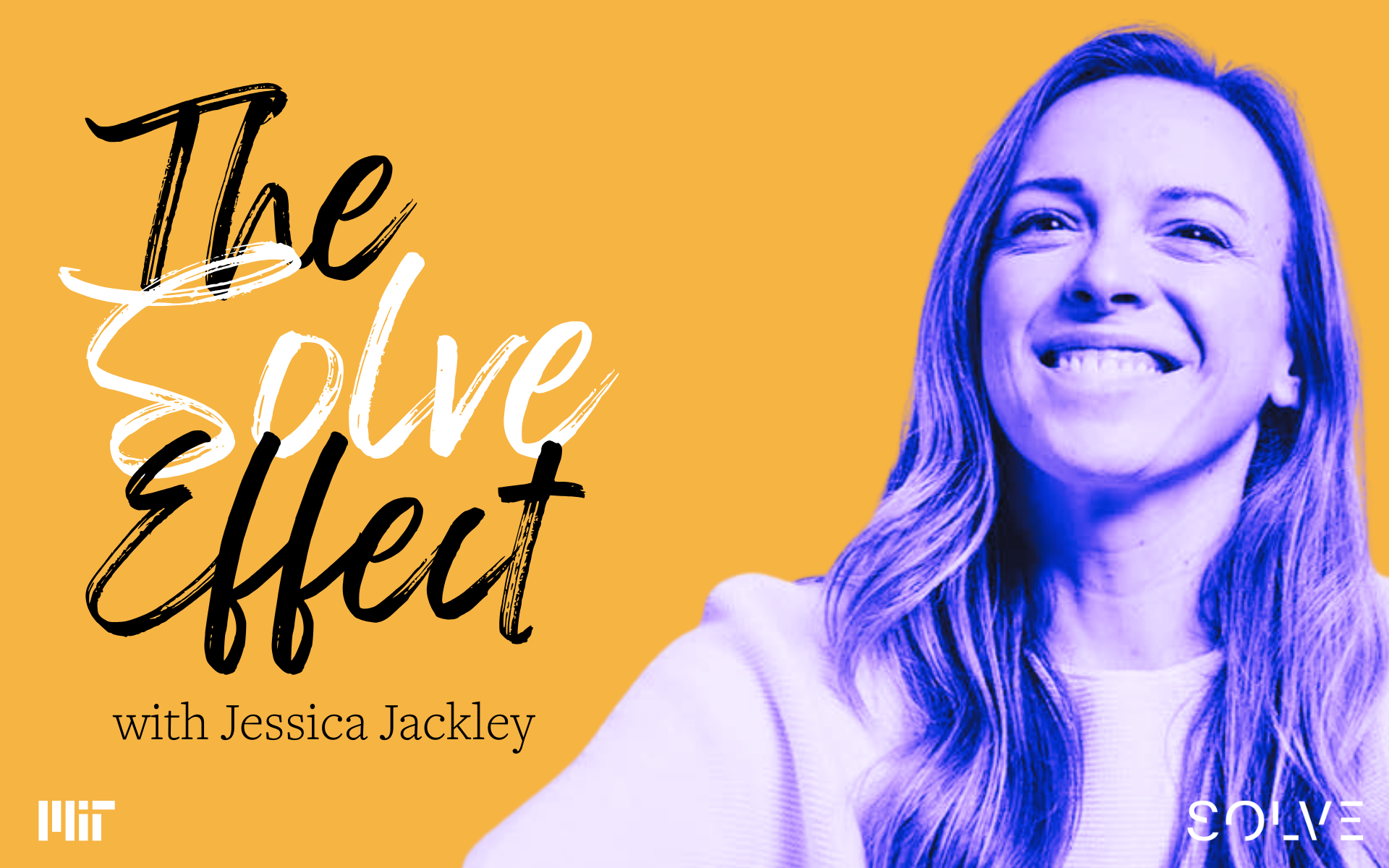
This is a transcript of Episode Nine of The Solve Effect, edited and condensed for clarity. Listen on Spotify, Apple, or Amazon Music.
Hala Hanna
Welcome to The Solve Effect. I'm your host, Hala Hanna. Now, imagine you're in the early days of building. Tiny team, cramped office, all adrenaline and duct tape, and then the phone rings.
Out of nowhere, someone offers you $10 million to scale. And you say, no. That is a true story from today's guest. One of those moments that sounds irrational until you realize it's actually a values test about what does this money turn our work into. So today we're joined by Jessica Jackley, serial entrepreneur, investor, professor, author, a mom of four.
She co-founded Social Unicorn Kiva, one of the first perhaps platforms that helped make person-to-person giving and lending a thing, and has helped move over $2 billion in loans since. Jessica is built beyond Kiva, too. She's founded Alltruists and ProFounder. She also teaches entrepreneurship at USC, Marshall School of Business, while also being an investor through Untapped Capital. In her current chapter, very new news, she's the CEO of VOW for Girls, working to end child marriage within this generation.
I so wanted this conversation with Jessica, because Jessica has this rare ability to talk about capital as a tool that can rearrange power, dignity, and relationships for the better. Jessica, welcome.
Jessica Jackley
Thank you so much for having me.
HH
Well, let me start by congratulating you on the new gig. You recently joined as the CEO of VOW for Girls, a nonprofit dedicated to ending child marriage. And this is probably one of the rare times you have a job that's, as you would say, not something you created out of your own brain. So I want to hear how that feels and how this role fits into the rest of your incredible trajectory.
JJ
This is the very first time I've even spoken about the role publicly—haven't officially announced yet. So by the time this airs, it should be out there in the world. But yes, I'm just a few weeks into this new role as CEO of VOW for Girls.
And I fell in love not just with the issue and the way that it's a problem to fall in love with, these wicked problems as we say in the impact world. It's so layered. There are these secondary and tertiary sort of effects that are really important issues in and of themselves around reproductive health and girls' education.
But honing in on child marriage as the entry point or as the thing to focus on and to address, I was really drawn to this.
I have a young daughter. The idea that anything would get in the way of her trajectory is. . . it's hard to even think about. And yet there are hundreds of millions of women today and girls today under the age of 18 that were forced into marriages that really do set that trajectory and that eliminate a lot of other opportunities.
And so I was invited into this role and I just, I… fell in love with it. I fell in love with the team and the founder. She's an incredible force of nature. It's an outstanding board, and it was something I couldn't say no to.
HH
Well, I do want to go back to, you know, when you became an accidental entrepreneur, when you created with Kiva the person-to-person micro lending platform before crowdfunding was a category. I'm really interested in hearing what problems it is that you were trying to solve because you came to this with a very different lens on what it is that you wanted to do.
JJ
Yeah, you know, the reality of my mindset and my perspective on the world and on myself at that moment in time, twenty-some years ago, was so different than what, even if I was just describing what it was today, it's different than how I felt then and how I felt and saw things then. I had a specific community of people that I had gotten to know through an unpaid internship with a tiny nonprofit that gave microgrants, not even really loans, in rural areas in Kenya, Uganda, and Tanzania.
And while I was there, I understood the journeys of those entrepreneurs, and I more importantly heard the stories of their lives in an unfiltered way, not through the framework of well-intentioned nonprofits that had a particular angle they wanted to eventually present to the world. So here's a story of sadness and suffering, and only highlighting particular details, truthful details, but those stories, they're marketing materials, right? They have an intention to activate certain emotions, certain reactions in people, so that they will, out of their best intentions, participate and change by giving. And that's an accessible way for a lot of people to get involved. I didn't feel like that was enough for me.
And so when I was in East Africa with this tiny nonprofit, Village Enterprise, hearing stories directly from entrepreneurs themselves about how a tiny amount of money had totally changed their own lives. I felt freed from that narrative where I was only cast in this one role as a potential donor. And I could go on with my life after I'd given. I wanted to be more involved. I wanted a connection. I wanted an ongoing relationship. But at that period in time, 2004, 2005, a lot of technology was making it possible to stay in touch, to follow the journey, to, you know, to allow for these tiny bits of capital to go to the long tail of not just microfinance institutions, but of borrowers.
So we were finally able in this moment to do payment processing online, which sounds ridiculous today, twenty-five-ish years after the fact, but we were able to say, "Hey, if you have a PayPal account or a credit card, you can come online and actually get this $25 from you to the goat herder in Uganda." That was an astounding, incredible, miraculous sort of thing back then.
So it's one thing when you, the would-be donor, gives $100 to an organization that then eventually gets into the hands of somebody that needs it. This was, here's 25 or 50 or even a few hundred dollars. So just a few hundred dollars could do incredible things. So here's this funding and over time that funding comes back. That really changes the nature of the relationship. It changes that power dynamic.
The individuals that I was meeting and working with way back then didn't want a hand out, they wanted to have that ownership over their success. It allowed me to get involved and to stay involved and build, if not relationships, a deeper understanding over time as both money and information about that change came back.
HH
And we definitely have that in common at Solve, you know, the deep belief that ingenuity is equally distributed and opportunity is not. And it's really inspiring how you turn that story of brokenness that people reach out to sometimes to one about dignity, and from transaction to relationship and from helping to witnessing. I love the idea that you go from gratitude on the part of the receiver to ownership and shift that power dynamic.
As platforms, because of all the technology, there could be wanting to optimize for efficiency, but in so many ways you've optimized for relationships and that turned out to actually be the scale strategy. So I'd love to hear, what are the design choices or decisions that you've made that have protected that over the years?
JJ
At the beginning of Kiva, some of the things that we did to, you know, it's hard to take credit for much of anything 20 years later, but for the first few years, we ensured that we got as close as possible to the voice of the borrower, the eventual borrower, the entrepreneur.
We used language that they would use. We also deferred a lot to the partner institution, the microfinance institutions that exist in the world anyway, and were finding and wanting to lend money to these borrowers. Kiva just allowed for the money to flow through and provide this flexible source of capital for them, which was unique in their funding landscape.
And I remember the idea of creating partnership relationships whenever possible. That fed into product design. It fed into the way that we, what we ask for, how we ask for it, and even what we designed on the side of the lender profiles. I remember anecdotally being in the field and hearing from some borrowers that they actually had gotten a chance to invest in a bicycle taxi ride into the village, get onto the dial-up internet connection, and see their own profiles for the first time. And some of them, many of them could not read or write, but they had figured out how to do this, and I think had somebody help them check out the profiles online, and they were very curious as to who was lending them money.
HH
You've remained very involved with how do you move capital to the right places, whether it's, you know, from microloans to crowdfunding to venture investing. It's ironic for someone who didn't like money or didn't think that business was like the source of doing good.
How do you see the role of money today and where do you still feel that it could distort impact?
JJ
I've been having a lot of conversations lately on two fronts with my colleagues, fellow faculty members and professors about how to teach intention in entrepreneurship.
But when you can just go from an idea to a full-blown business that's up and running, really with the tools that we have today, almost instantly, in a few hours, if not just a few days, how do you think about where it's responsible to place bets? What must be done before capital is spent on an idea? Even if you're able to move that quickly, when is speed good?
Perhaps an argument could be made that you can build the same empathy after the thing is built, but I feel like there's a step that is sometimes missed when we can move so quickly with very few resources at the beginning. And that step is really just thinking carefully about short-term and long-term, what we want the effect on the world to be. And like, is this good? Is this good for us? Is this good for the world? Is this something we would want to live with five, 10, 15 years from now if it takes off?
As a founder even, mean super selfishly, is this something that will fit you? Or are you creating a bit of a monster where the more you put out into the world without having done that deep thinking at the beginning, the less control you might have. And we talk about externalities as if they just pop up and we're always surprised by them. You can really be thoughtful about those things before.
So that's one set of conversations.
And I guess the other is, when is it the right time to pour fuel onto the fire? Like when do you capitalize? When is the ideal time to invest?
And what does that look like? And what kind of responsibility is, Whose responsibility is to make sure that it's been at least directed in, know, directed and as intentionally created and designed as it needs to be before we just put a bunch of stuff out and create a very noisy, busy, even busier space where our attention is so fragmented and there's so much coming at us.
HH
I think you have such a clear filter for what is worth your time and effort, and I say so because you're very good at quitting, even as the world might be giving you this very flattering message.
JJ
Yeah, it's funny. Isn't it easy to bristle at that word: “quitting?” I appreciate that, and I think I probably am good at it, but I'd like to rename it because quitting just feels so right?
HH
It has such a stigma now, yeah.
JJ
I like to think of it as you're running a series of experiments at any given moment with your venture, with an existing organization. You run those experiments, you learn, and then you step back. And with that new information, you point in a different direction, slightly, right? If you've learned, unless all of the assumptions that you had at the beginning have proved out to be exactly true and exactly the way that you thought, but that just doesn't happen.
So with my second company, ProFounder, we existed way back in 2010-ish to create a better way for small business America to crowdfund what they need, especially in the early stages.
This was the best way to get unaccredited and unsophisticated investors involved in your private raise of capital, usually for a small business, before crowdfunding was legal.
When the JOBS Act became a thing, Dana Moriello, my wonderful co-founder, would fly to DC multiple times and testify in front of Congress about why crowdfunding wasn't so scary and it would be OK. And then we ended up getting to write pieces of parts of language that ended up showing up in Title IV in the JOBS Act.
Anyway, we saw this change coming. We had a product that was working, but we also knew that with the JOBS Act, the SEC would make its rules. And so we had a Series A offer on the table, and we decided not to take it because we knew the world was changing. I knew what my values were, and I knew that I wanted to be a present parent in a way that I couldn’t have been had we just continued, even though it was a fast growth startup.
So in the end, we gave some of the funding back. We gave away some of the assets to different investors. One of the companies of an investor that had participated in earlier rounds ended up technically acquiring pieces and parts of us. And so I ended up going and was in EIR at his company for a while and I had my babies and I got to focus on them in a way that honored what I really believed in what mattered to me.
I say this, it was a hard earned battle to get to that place.
However, I thought I knew what I believed, right? But having gone through my first startup with Kiva and going through, not to get too personal, but it is part of my story, going through a divorce with my co-founder.
You know, my personal life crashed and burned while Kiva was this rocket ship, and I knew that no matter how wonderful an organization or my career path was, I would always differently honor the relationships in my life.
If you don't need to own and capture everything for yourself, my gosh, you can get a lot more done, I think. Jennifer Brandel talks about this in a beautiful way. She wrote a piece years ago called, let's see, “Zebras Fix What Unicorns Break.” I think that was the original piece.
She basically says, “Look, not everything needs to be a unicorn. This is like one set of metrics, one way of defining success, one path."
Building a venture can be like one beautiful art project. If you really, actually care about just getting the thing done, you can give a lot away. You can move faster, move more quickly, and get your ideas to spread farther if you remove some of the friction of requiring people to pay. And I recognize, looking back on my own career, that that has been an asset to think a little bit differently about venture building.
HH
Well, multiple wisdoms in here. The first one, quitting as wisdom. The second, centering relationships as wisdom, and also that so much more would get done if we didn't care who took credit. For those who are listening and thinking about or going through the process of thinking about what is the best way to structure their art projects that are going to hopefully become more than that. What would you say?
JJ
Simon Sinek, a lovely human and a friend, he talks about starting with why. I think that's essential. I also like to think when we're talking ventures, starting with who. Who are the people that you want to serve? Who is the person or the segment that you've fallen in love with and that want to know and understand very, very deeply and you want to design around?
You have to have your primary user, and once you have that down, then you figure out really truly what is the problem. And if we talk design thinking, you “how might we” question your way to identifying very specifically what the need is and the design challenges, the design boundaries are. And then once you figure out what will be helpful to those individuals, it may or may not be something that they can afford directly.
And then what do you do when you come up with a beautiful solution that they can't directly afford? Well, you get creative and instead of requiring that they pay for the value you're creating, you figure out who else sees the value too and can pay for it. And to me, that's the decision point. I think required reading should be Eric Riese's new book that's coming out in a few months. It's called Incorruptible, and he talks about not just having the right intentions at the beginning, but designing for the long term so that your organization, does not get pulled down by the gravity of how the world thinks about value and money and all these defaults.
What an interesting and intellectually stimulating task to figure out how to do two things at once, serve the people that you want to serve with the product or service or intervention that you want to provide to them, and then tell a beautiful, incredible, powerful story to those that have capacity and will also see the value but will not necessarily receive it themselves.
HH
We have a tendency to overestimate how hard it is to help and underestimate how joyful it will make us. But, tell me a little bit more about this, if a donor is listening and wanted to fund autonomy rather than gratitude. What would they do differently?
JJ
Radical trust and transparency. Organizations like GiveDirectly—direct cash transfers, right? They're not the only ones that do but they're certainly like a gold standard actually working with communities where instead of designing a program or using funding to open a food bank or something, it's just cash directly into the hands of people that need it.
HH
Don't give a fish. Don't give a rod. Don't even teach how to fish. Just give the money.
JJ
Do you want to go buy fishing lessons for yourself? Cool. Do you need better bait? You know, go do that. Do you want a net? Like what's the thing that you need?
HH
It kind of comes back also to probably the future of philanthropy is relationships, you know, going back to that idea of centering relationships.
You've used the word, “fearless” to describe how you approach things in your life and it didn't occur to you that there were things that you couldn't do, and you've attributed this very much to your upbringing that you were supported but also empowered. I'm interested in how we build that muscle. How do we become more brave both as people and as society? Because the moment really calls for it.
JJ
I love that you said what's this muscle, like how do we exercise this muscle, because it truly is muscle memory and training, right? If you exercise the muscle of being skeptical or seeing where risk exists, you'll see risk everywhere. If you exercise the muscle of seeing opportunity, looking hard for solutions, finding abundances, seeing what is going right in a situation, you'll see more of those.
I think being as action-oriented as you can possibly stand, and with the best of intentions.
Do you feel confused about something? Go read 10 articles about it. See where you are at the end of that. Do you feel like you, yeah, you don't fully understand somebody that you would like to serve or that you interact with day to day? Go talk to 10 people. Spend an hour with each of them. You will be fine. Erring on the side of engagement, of relationship like you've said so wonderfully throughout this, and of being action-oriented around what you want to see get done in the world.
Little experiments, running little experiments and taking small bets will push you forward so much more quickly and you'll get braver. You'll build that courage. People don't really, I don't think, you can start out courageous and fearless. If you're super, super lucky, and I count myself in that category, but you can also build that muscle by getting out there and doing the next small thing that you can towards your greater vision and what you want to be and who you want to become in the world.
HH
Smaller experiments, test assumptions, and see where that goes. That's what you've done your whole career. You've just like also built on one thing, build on the next, build on the next. Is there something that you've changed your mind about when it comes to innovation, in fact, know, capital?
JJ
Well, I do believe that a competitive advantage going forward, given the speed of change and the speed with which we can create things, will be that pre-work, will be the empathy-building piece, the deep listening, and being able to understand what we're hearing and seeing from people. Being able to, I mean, humility, gosh, if we don't have that in our innovation processes, like we are screwed, because it's so easy to come in with all your big shiny ideas.
And certainly the longer you are in a career, the more you think you know.
And that's okay, but it's so important to go into conversations without judgment, without a lot of preconceived notions, so that you can actually hear and see the important insights that surprise you. Like surprise is so good. Being surprised, feeling like you were wrong about something, gosh, that's so good. Because that means you're really gaining, you're really learning, right? And you might be on to discovering an insight that will open up a ton of really new and interesting innovative options.
HH
It's so true. We all want to contribute to or feel like we're part of something that's bigger than ourselves, whether it's another person's success or, you know, preserving democracy or whatever it is.
JJ
My overwhelming desire right now, I just am trying so hard to grow and push myself really hard to iterate myself and to innovate myself on who I am. I feel like I'm about halfway through, God willing, through my career and I would really like to level up incoming chapters.
It's interesting to do when you're already having, when you're already years in, and you've been seen as having success. It sometimes is harder. It gets harder to grow and harder to evolve.
When you're in your 40s and 50s and beyond, it's trickier to find mentors. It's more about peer guidance and support. And so, yeah, I'm just, I'm really eager to grow. So I would hope that if you and I had this conversation in another decade, I'd have a ton of new, fresh insights, stories, et cetera. And maybe will have changed my mind on some things I've even said today, who knows?
HH
If you had told me Jessica Jackley wants to level up, I would not have expected that. I think that is another takeaway. It's an internal job that is never fully done.
JJ
There's no other way than to keep trying to grow. I will say, I feel this is on my heart as well for any parents out there. So my kids are, I have 14-year-old twins, I have an 11-year-old, and then I have a newly minted six-year-old. And it's the first year in 15 years that I have not had, well, 14 years, I'm sorry, 14, that I have not had kids at home between the hours of nine and three on a regular basis.
I didn't expect to have such a feeling of revitalization. So I am as motivated as ever to grow, to keep learning, and to dream, to dream big dreams. So it's a really lovely season. I'm very happy to be in this moment, and I didn't really see it coming.
HH
It's such a privilege to be catching you at this moment of transition, both personally and professionally. Thank you so much. Talking about a fangirl, I'm the one who was fangirling here.
JJ
Thank you. My gosh. Right back at you. It's mutual. It's mutual, my friend.
HH
Here is someone who’s co-founded a category-defining platform, shaped legislation, is stepping into new roles, and yet what she's most excited about is what she has yet to become.
That humility, that willingness to stay a student, to seek out surprise, to treat your own assumptions as the next thing worth questioning—that's her competitive advantage.
Another thing? always keep your values at the center. Turning down 10M$? Giving back investors' money and saying no to a Series A? Yup. Makes sense. What you say no to will shape your path just as much as what you say yes to.
Her other advice flips the entrepreneurship playbook: start with who you want to serve. Then LISTEN deeply. figure out what they need. If they can't afford it, get creative about who else values it and will.
Exercise seeing opportunity, and you'll find abundance. I hope this conversation gives you permission to seize that next opportunity—whether starting something new or quitting something that has run its course.
I'm Hala Hanna. Thank you for joining us for this episode of The Solve Effect.
This episode was produced by Bridget Weiler and Elisabeth Graham. Audio production by Kurt Schneider at MIT Audiovisual Services. Music by Tunetank.
Tags:
- Podcast
Related articles
-
Stacy Brown-Philpot on TaskRabbit, Trust, and Doing Hard Things
-
Bonus Episode: LIVE from Solve Challenge Finals 2026
Go behind the scenes at Solve Challenge Finals in this bonus episode of “The Solve Effect.”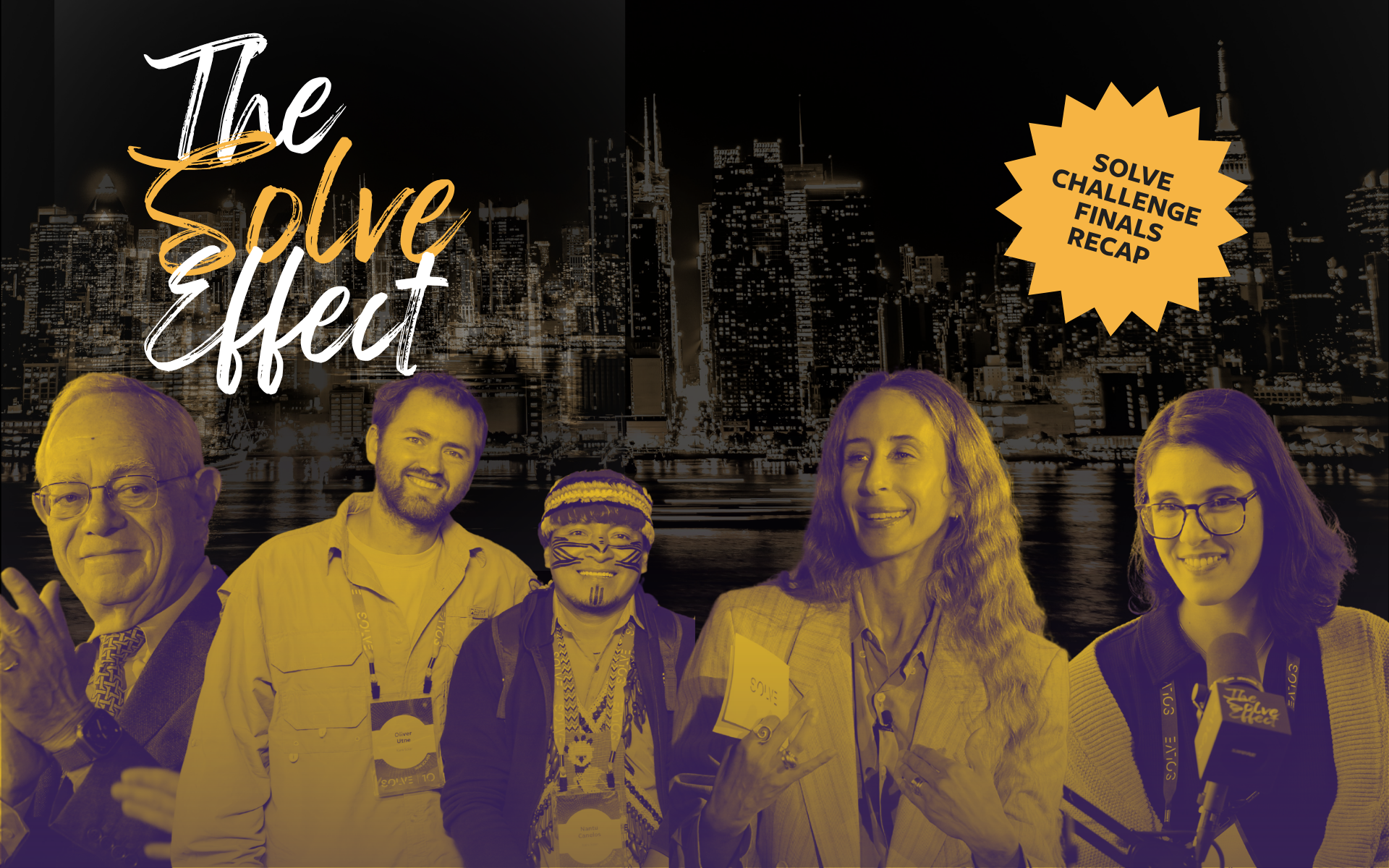
-
10 Years, 10 Solvers: From 14 Days to Under 60 Minutes—Revolutionizing Radiology Reporting with Rology
Ask Amr Abodraiaa what Rology looks like from the patient's side, and the answer is: nothing at all. Invisibility is the design goal. What the patient gets is the result.