Funder Program
Philanthropy is one of the most powerful forces in global development.
It’s flexible, risk-tolerant, and capable of funding solutions that no other capital will touch. But its impact depends entirely on finding the right opportunities, at the right moment, with the right criteria. That’s where MIT Solve comes in.
Whether you lead a foundation, advise high-net-worth clients, direct a corporate giving program, or give as an individual, being part of MIT Solve’s Funder Program connects you to rigorously vetted innovations, peer intelligence, and a community of fellow funders working in the margins of philanthropy’s potential impact.

Our resume
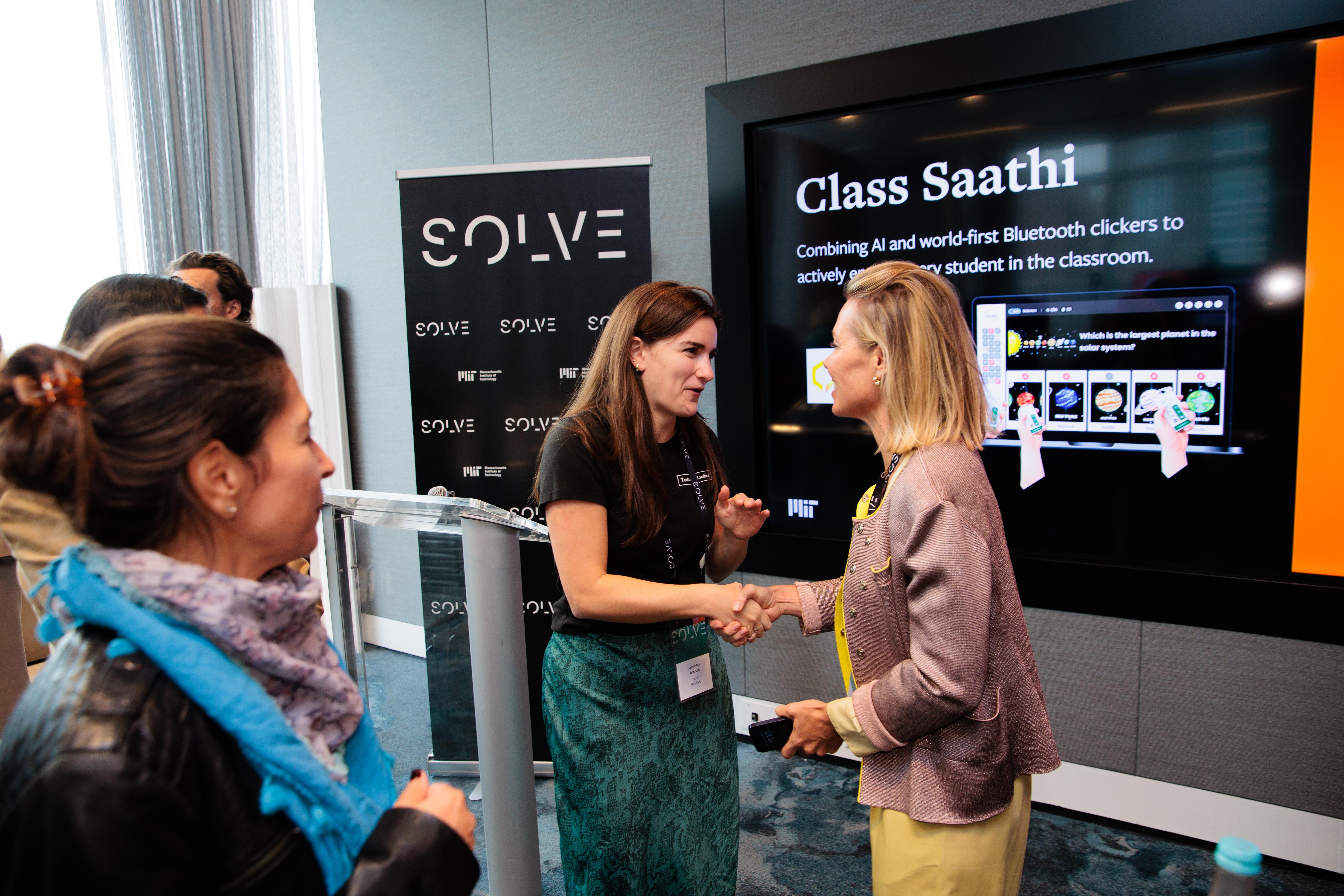
Since 2016, we’ve run over 100 open innovation challenges that have received 28,200 applications. The 460 innovators, fondly referred to as Solvers, that we have selected and supported have gone on to reach over 430 million lives across the globe and raise over $1.4 billion.
That's impact in action.
-
65%women-led
-
68headquarter countries
-
57%for-profit/hybrid
-
41%growth
-
92%of Solver teams in the past five years are still operational
Convenings
We regularly bring together funders, philanthropic advisors, family offices, and foundation leaders for substantive conversations about where the greatest opportunities within philanthropy lie and what it takes to reach them. Events may be a dinner, a programmed workshop, or networking featuring Solve innovators, MIT researchers and faculty, and leaders from across the philanthropic sector sharing what's working, what's needed, and what's next.
Custom Challenges & Prizes
Work with MIT Solve to design and fund a named challenge or prize in an issue area you care about. We handle the end-to-end sourcing, selection, and scaling program, drawing on our experience as a global open innovation engine. Your funding goes directly to vetted, high-potential innovators with measurable outcomes tracked by our in-house impact team for up to five years.
Toolkit
Access a growing library of research, white papers, and practical guides for funders, advisors, and nonprofits. From AI as a grant making selection tool to trends in catalytic capital, non-cash giving, and impact measurement, we’ll provide you with the framework to give smarter.
AI Thought Leadership by Solve
-
What Industry Experts Are Saying About Our AI Future
The global AI market is projected to expand at an annual rate of 37.3% between 2023 and 2030. While there are concerns about the potential negative impacts this accelerated growth could cause, 64% of businessesare optimistic that AI will enhance their overall productivity. What’s more, this growing belief in AI's...
-
Building Trust, Not Just Tech: 3 Lessons on Ethical AI from the Frontlines
Artificial intelligence is reshaping our world—from powering everyday tools like voice assistants to transforming entire industries. But while the promise of AI is vast, access to its benefits is not. Too many communities are left out of the systems and opportunities that drive health, education, and economic outcomes.
-
How AI Helped Us Screen Applications in Half the Time
In this AI for Good series, we’ve been exploring the growing operational challenges facing social sector funders. One big issue we’ve noticed across the industry is the influx of grant applications, driven by generative AI tools and shrinking government and multilateral funding.
-
The Future of Grant-Making: How AI is Reshaping Proposal Evaluation
The philanthropic sector faces a mounting operational challenge: how to efficiently evaluate an increasing number of grant proposals while maintaining rigorous standards. The traditional solution of adding more reviewers or extending review periods isn't sustainable, especially for organizations committed to rapid response funding or regular grant cycles and operating with limited resources and staff.
-
Did AI Get It Right?
Reviewing screening outcomes for the 2025 Global Challenges
-
From “Does It Work?” to “Does It Work Responsibly?”
In 2025, Solve expanded technical vetting to reflect a simple truth: in impact tech, ethical failure is functional failure.
-
What Three Years of Data Tell Us About the Future of Technology
Over the past decade, the tools available to innovators have expanded dramatically. Here's what we've learned.