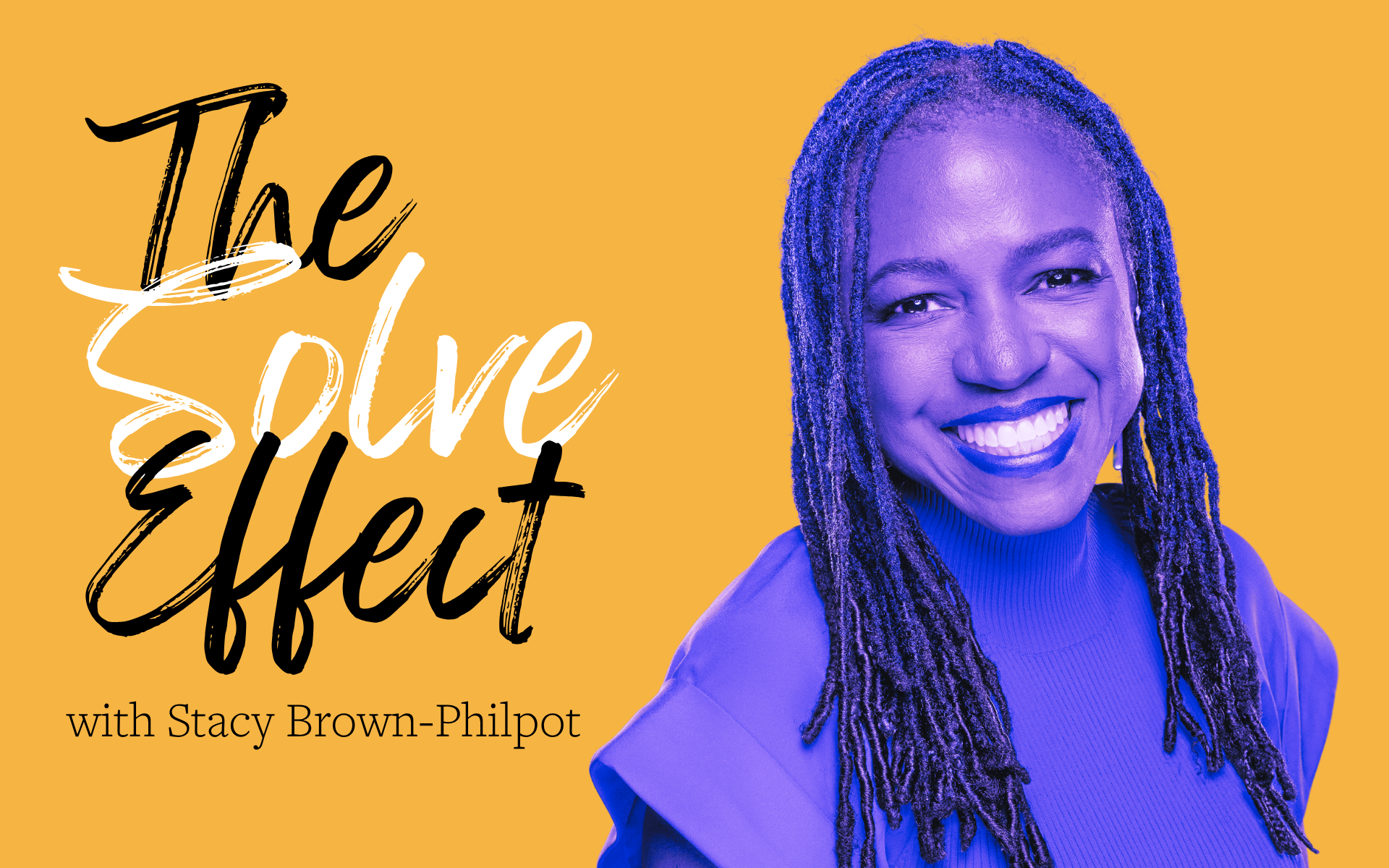
This is a transcript of Episode 24 of The Solve Effect, edited and condensed for clarity. Listen on Spotify, Apple Podcasts, or Amazon Music.
Show Notes
Stacy Brown-Philpot is the Founder and Managing Partner at Cherryrock Capital, an early-stage venture firm focused on helping the best emerging software startups scale from $1M to $100M+ through operational excellence. Stacy has over 20 years of experience in the technology industry, leading the growth and scale of large and small enterprises in the digital economy including Google and TaskRabbit. Stacy is the former CEO of TaskRabbit, the leading task management network. Before joining TaskRabbit, Stacy served as Entrepreneur-in-Residence at Google Ventures, lending strategic expertise to the firm’s portfolio companies. Before that, she spent nearly a decade leading global operations for Google’s flagship products.
The Solve Effect is a production of MIT Solve, MIT's initiative connecting social entrepreneurs to the funding, partnerships, and expertise they need to scale.
Transcript
Hala Hanna
Welcome to the Solve Effect, where we talk with extraordinary people challenging the status quo for good. I'm your host, Hala Hanna.
Imagine making a change that doubles the success rate of your business, and then you watch the backlash almost bring its downfall. That's what happened when Stacy Brown Philpot joined TaskRabbit as COO and replaced its bidding system with a direct-hire model. Task fulfillment climbed to 90%, but users felt their agency had been taken away. Now, Stacy rebuilt both trust and revenue. In fact, she went on to become TaskRabbit's CEO and led the company through its successful acquisition by IKEA.
And before leading the organization that defined the gig economy, she also had a front seat to an iconic time in tech. She spent a decade as an executive at Google as it went from 1,000 employees to 50,000. And today she's founder and managing partner of Cherryrock Capital, a $172 million fund backing underinvested founders. And she sits on many, many public and private company boards, most notably HP.
So Stacy's work is really a live case study in Solve's founding bet that the best solutions often come from people that the traditional system wasn’t even built to notice.
Stacy, welcome to the Solve Effect.
Stacy Brown-Philpot
Thank you for having me.
HH
So Stacy, you grew up in the west side of Detroit in a house that spanned four generations of matriarchs. And your grandmother would tell you, “If you don't stand for something, you'll fall for anything.” Was there a moment you can point to as a young person when you had to decide what is it that you stood for?
SBP
Yeah, Grammy was so meaningful to my life. She helped raise me. My mom was working sometimes two jobs, but a lot of hours. And Grammy would meet us when I was coming home from elementary school. And I remember when I was going to school, I was commuting, taking the bus to a different school that was outside of my neighborhood. And these girls were picking on me all the time. And she's like, “You have to learn to stand up for yourself.” And I was like, what does that mean? And that meant I had to sort of face these girls who would just tease me as I was walking home.
And so one day I came home and they followed me. I get to the door and she opens the door and she sees them, she sees me and she closes the door. And I'm like, uh oh, I can't go in. I have to learn to stand up for myself. And so I did. And I didn't win that fight, I will admit, because it was more of them than me, but I definitely stood in there and stood up for myself. And it stopped. So that was it. The literal and physical standing up for yourself.
HH
That's where it all starts. and then also, you tell so many stories of your upbringing in Detroit at 10, that you were delivering newspapers through Detroit winters and chasing people for the pay. And my understanding is that the OKR back then was candy.
SBP
Yes, it was, it was—we had to make our own money. We did get an allowance, but if you made more money, then there was more candy.
HH
Well, that's a great first lesson in capitalism that works.
SBP
That's right!
HH
But Detroit taught you so much more, right, about values and work and community that then served you in Silicon Valley. What's a piece of “we do hard things” from Detroit that would never show up in a business school case study perhaps, but that really lives within you?
SBP
I remember I was going back through some old papers and things that my mom kept from my childhood. And I'm so thankful that she kept those things. And as a mom now, I'm like, oh my God, this is why I'm keeping those things, so when my kids are like 40 years old, they can look back, and one of the things I looked back on was when I was captain of the majorette team—majorettes are baton twirlers. And so we would perform at football games for my high schoo,l and we would also march in the Thanksgiving Day parade.
And in Detroit in November, it is cold. But we wore our little short skirts and our sweaters and little Santa hats and our uniforms, and it was freezing. Like 10º weather, throwing a silver metal stick up in the air and catching it, walking down the street in the winter in Detroit was not an easy thing. And you had to wear a smile and show the crowd and create an experience for them. That was hard, but it was fun.
HH
And someone saw in you a captain very early on.
SBP
It was, yes. And it was the team. I remember wanting to be a majorette ever since I got to Cass Tech High School. And then I get on the team and they're like, okay, Stacy, we want you to be the captain of the team. And I was like, me? And it was because I was pretty organized, and I was ready to lead. And one of the letters that I found that my mom saved was a letter that congratulated new members of the team. And it was typed, and it was signed by me and the co-captain. And then I listed all these rules: when you're on this team, we have practice these days. If you miss a practice, you need permission in advance. And the parents have to sign off on you being on this team. Here's the budget. Here's how much the uniforms cost.
And you're on probation until you can prove that you can do it. Welcome to the team.
HH
What an encapsulation of those early executive functions.
At TaskRabbit when the auction model was failing half the time, allowing Taskers to earn very little money, and you changed the business model to direct hire and established a wage floor. You were right, but for a while there, I think the signals were all pointing red. Can you tell us the story?
SBP
Yeah, the reason why we did that was TaskRabbit was started with sort of this eBay for services. You could just put in the price that you're willing to pay for something that somebody wants done, the person just goes in and picks you and that's it. And the problem that we had with that was that we were spending money on marketing, but for every dollar we spent on marketing, we were not making money on those dollars. You could never scale a business that way and grow successfully that way because you'd run out of money and the venture capitalists were never going to continue to fund you.
So we had to come up with a model that allowed us to spend marketing dollars to acquire customers who would stay with us and spend money over time so that they would be profitable customers and we would retain them. And in order to do that, we had to change the auction model because even if you had this auction process going, you had a 50% [completion rate], which is basically a coin-toss chance of getting your task done on TaskRabbit.
So we changed to a model that was a direct hire. As a Tasker, you would list who you are, what you do, here are your skills, here's some reviews of some prior experiences that you've had. And then the client would go in and look at all the options, directly hire you through our platform. You'd know how much it was going to cost, you'd schedule it, and you'd know that task would be done. And when we changed that model, it went from 50% to 80% and later to over 90%, which was fantastic from a retention standpoint, customer experience.
But along the way, what we forgot to do was bring the community along. We had tens of thousands of Taskers at this point who were used to that auction model. When we made the change, we tested it in a new market, which was London. The company had never existed there before and all the people in London loved it. So we said, everyone here i in the United States is going to love it too. So we brought it back, launched in the US, but the people in the US were like, wait a minute, I had this other model that worked for me. Why did you change?
HH
There are so many lessons here because you basically had to distinguish the pain of a necessary transition from evidence that the decision itself was wrong. It becomes much harder when there are like 200 angry emails in your inbox. Did you have a “rip the cord” threshold in advance?
SBP
We did. We did. We're like, if this doesn't work, here's the revert back to the “old way” plan. Old way in air quotes. And every day we would meet and we would talk about what are the metrics that we wanted to see. We wanted to see retention. We wanted to see fulfillment. And then with those two metrics, if we are fulfilling more tasks and people are happier, we should see like the curve shift and revenue start to go back up, but there’s gonna be a lag. So like, let's wait a month. And I would sit on my couch at home and I would just like get yelled at and just say, I'm sorry, we made this change. We hope you like us in the future. Please give us a chance. Some people didn't give us a chance. They quit, but the beauty of it is that we got new customers
HH
Recognizing what's fog and what's the actual weather, that's huge. And then what you're describing about, some people feeling like the carpet was pulled under them: the same dilemma exists today on so many platforms, but it's way less transparent than a model changing. You know, the algorithm changes and people find that their bottom line is slashed, whether it's Uber, Instagram, etc. The list is long. Someone may ask what obligations do platforms owe people who have built their lives around rules that the company is fully legally free to change. How would you respond today to that?
SBP
Yeah, we always try to do the right thing for our Taskers. We did things like set the lowest minimum hourly rate that you could charge after we changed the model to the highest minimum wage in the country. So we just made sure that If you're gonna use our platform, you could earn a meaningful income if you performed well on your tasks.
We added benefits, we added a lot of things. And so I think there's a balance. A lot of AI companies are like, “Hey, we're just a platform. You can use it however you want, and it's your job to figure out the right way to use something,” but there's ethics around it too.
We always led from a place of care, and that was one of our values at the company. I remember there was a Tasker who was doing work on our platform that we stopped allowing. It was like writing documents and transcribing things. And she was on the phone with me and said, look, how am I gonna make a living? This is what I was doing to supplement my income while I pay myself through school and take care of my kids. And I said, “I'm so sorry that TaskRabbit cannot be there for you.” And even sitting there and listening to her was emotional for me. It was emotional for her. I couldn't change what we decided to do as a company, but at least I could take the time to hear her out and listen and have empathy. And I just think we as leaders have to make sure we're taking the time to do that.
HH
You said earlier, you would want to have brought the community along.
We see it again today on Reddit and other platforms, like that's hard work. How would you even do that?
SBP
It's harder now. What we did then was we created our first Tasker council, for example, that we will talk to proactively about things that are coming down the pike and get your feedback. And then your job as the council is to sort of feel that out with the community as you communicate with other Taskers that we're not a part of and tell us what we should be knowing and really trying to create some anchors in the community.
Today, there's so many platforms for sharing feedback and people like the anonymous nature of being able to do it. And that's unfortunate, right? I love transparency. You got a problem with me, come to me.
HH
Tell me to my face.
SBP
My grandmother closed the door. Those girls had a problem with me, right? Come to me. So that's something that's so important.
HH
There's a real also public mood shift in tech right now, a lot more skepticism than there was three years ago. What is a tech industry belief that you might have held back then that you've changed your mind on?
SBP
When I joined Google, it was this big mission: organize the world's information, make it universally useful and accessible. And it was so grand, and it was so inspiring, and it was so inclusive. And that's why I joined the company. And we were talking about how now this thing called the internet is gonna give you this access to information.
Today, I don't know that people feel like the new technology is for them. Are you building this for me or are you building it for yourself so you can make a whole bunch of money? Are you extracting value from me? Are you taking my job so that you can make money? And that's the difference now. That's the feeling now.
HH
One thing is that, for you, venture was not a late career conversion. It sounded like venture was the plan that you wrote in your Stanford application. And then you had a two-decade detour.
But when you were at Google, you launched the Black Googler Network. And so you went from representation inside an institution to redesigning an entire market for work at TaskRabbit and now you're redistributing capital at Cherryrock.
SBP
So with Cherryrock, I took my 20 years of operating experience, board experience, and instead of putting that back into one company, I wanted to invest in the next generation of entrepreneurs and truly change the face of wealth creation. Grammy nicknamed me her cherry pie growing up and she was the rock in our family. She lived to the wonderful age of 96. And so that's what Cherryrock Capital is about: how are we the foundation of success for the next generation of entrepreneurs? And that's what we do.
HH
Getting into the room where capital gets allocated is one of the highest leverage points for changing who gets economic opportunity.
I've sat across from a lot of founders who were just doing wonderful work and still couldn't get funded. I'll give you one example. Gary Cooper out of Chicago is the co-founder and CEO. Oh, you know, Gary? Of course. okay. It's B2B SaaS resource management platform that scales the circular economy by facilitating asset reuses and tracking. He's one of our Solvers. And Rheaply has now raised over $30 million from a diverse group of prominent ventures.
I'm curious how you think about that versus where you're focusing, which is series A&B?
SBP
We saw a gap in the market, which is access to capital after you raise that first round. So it actually doesn't get easier. Because now you've got more proof points, which is: can you not only build a product, can you acquire customers and demonstrate the potential that you can scale that product? And so what I see at Series A is a lot of people get the first round up capital, which it's very difficult to do, but then can you use that capital well to build a product and generate customer demand in a way that you can show the scalability of the product?
And what we saw was a lot of underinvested founders would sort of get stuck. They get a little bit of money, but then they can't yet prove product-market fit. Cash is oxygen. When we decided to launch Cherryrock, we said, let's narrow our focus on leading rounds, writing larger checks to underinvested founders who we see have that potential to scale, but don't have access to capital, and let's be that lead check, that $6 to $10 million check that allows them to raise that $20 million round so that they can really go for it and scale their business.
HH
And you have said there is no pipeline problem when it comes to underinvested entrepreneurs, like they're there. And we say the same thing. Talent is equally distributed. It’s opportunity and capital that are not. If founders exist and the money exists, what are the broken mechanisms between them that you've seen?
SBP
Our first investment was in a company called CoactiveAI, founded by two MIT grads who went on to get their PhDs. One of them got a PhD from Stanford. And you would think, they have access. Andreessen and Bessemer led their Series A. I personally invested in the company. So is this an access issue for them? Even with that, sitting across and understanding the story of Cody and Will and being able to relate to that backdrop is a pattern recognition issue. If you don't understand that pattern, if you've not met people in your life or other people around you who've gone through what they've been through, you don't see that talent the way I see that talent.
For some people, it's literally just physically not being in Silicon Valley. If you're not in Silicon Valley—I've been here for over 20 years—there's just vocabulary, language, people, meetings, all sorts of things that you just aren't including and aren't invited to. And it doesn't mean you don't have a great idea because you might. Gary had a wonderful idea. But tapping into those networks is very hard to do when you're physically not here.
And so one of the things that we talk about at Cherryrock is I've built a network. My partner Saydeah has built a network in Silicon Valley that is unparalleled. It's like no other. And so we bring that network to our founders in a way that allows them to go to market faster, build their customer base, hire the best people, all the things that set them up for success and scale.
HH
And you said that you also had a hard time. People see the headline: raised $170 million. How was that journey for you?
SBP
It was, it was, it was one of the hardest things that I've done, but it's also.
HH
Says the woman from Detroit.
SBP
One of the most rewarding. It was harder because it's my thing, right? Up until then, up until I'd started Cherryrock, I had made other people's companies successful, Google, TaskRabbit, and poured everything I had into the success of those businesses. But I'm starting from zero. And starting a venture fund in what everyone described at the time was one of the hardest markets to raise a first-time fund. And everyone said, how are you going to raise at least $150 million for a first-time fund? That has never been done before by someone who hadn't had experience already working in venture capital for a long time. And so I had a lot stacked against me. But I had a vision and I said, all right, what do I know about being a CEO? You gotta have a great vision and a great team. So I said, I'm gonna hone my vision. I'm gonna find a part of the market that I can go after, be differentiated, and be able to compete and win deals. And then I'm going to build a team around me to help me do that.
We had over 360 different meetings with different people. And we were able to raise through that, $170 million. And it was a lot of meetings, and that means a lot of nos. But 83 of those entities said, “Yes,” and that was all that we needed. So hearing “no” over and over and over and over again is never easy, but I got through it.
HH
280 nos. You're coming home every day… how was your family involved in this?
SBP
My kids were, I have a teenager now and an 11 year old, two girls. We would sit down at dinner every day and they would just ask me like how it's going. And sometimes I'd sit down and a commitment would come in for $5 million or $1 million. And they're like, "Mom, aren't you trying to raise at least 150?" And I was like, yes. And they're like, You have a long way to go. I was like, okay. So they were super grounding. Kids will tell the truth in public. But it kept me grounded.
They also motivated me sometimes too. I remember taking one of them to horseback riding and I had a meeting. So I was trying to like do the meeting and do the mom thing. I'm in the car and I get on Zoom, you know, with my little phone sitting on the dashboard and daughter is in the back waiting to go to her class. And this was a pass. And I get off and my daughter's like, “Oh, that didn't go well.” And I said, “Yeah, it didn't go well.” And she said, “That's okay, mom, you'll get the next one.”
So in as much as they like, keep me grounded, she also lifted me up.
HH
You've been the first of so many things. And I know that it's really important for you that you're just like, lifting people up the ladder that you just created as well. But that must be a lot too.
SBP
It is. And I don't think of it as a burden anymore. I think a lot of times when you break out of a community that's struggling, you sort of are the standard bearer and the person who's responsible for bringing everybody else along with you and it feels like a heavy load. I don't think of it as a burden. I try to be a representative for what I want to see in the world.
I'm a Christian by faith and my work is my ministry. And so I try to represent what my purpose is on this earth. And if people see that and see that opportunity and see that as inspiration for them, that's great. But I hope that the things that I say , it creates a message and someone hears a message that inspires them to do the same thing for someone else.
HH
And you also said that it's really important for you that when you're investing in these companies that they put people first. How do you create that mission lock? Having to bring in money, be profitable, et cetera, that creates a lot of pressure. You know, what is your advice to funders who are truly wanting to be mission first?
SBP
You can't really get anywhere in life without having a purpose. And so this sort of mission first assumes there's a trade-off, right? Like, am I trading off mission and impact for profits? No, we are not a concessionary fund. Our job is to make money for our LPs [limited partners]. And we do that by investing in founders that other people might not see as high potential, and we do. And so that alpha creates opportunities for us to generate outsized returns. The founders that we back have a strong mission. They would never make it if they didn't because it's so hard to start a company.
HH
That's right.
SBP
My pastor always tells me that two things can be true, because sometimes when you're going through something hard, you're like, how can I go through something hard and also have something good happening in my life? You can be mission-oriented and create a massive company that generates wealth for you and the communities around you and fulfills a mission.
HH
In our portfolio, the survival rate for the past five years is more than 90%. I think one of the main drivers is that the majority of these teams have lived the problems that they're trying to solve. These are problems they want to punch in the face. They're not going to give up. As you said, you know what you're standing up for.
We've been talking about hard things and doing hard things. And I heard you say that recently you've moved from the struggle towards just simply being. And I'm wondering at this point in your life, what are you no longer trying to prove?
SBP
Not much. I mean, I have, according to my children, no fashion sense. So no longer trying to prove that.
HH
For those not watching video, I would disagree with your children.
SBP
I don't have to prove that I matter and that I belong here. And when you're early in your career, you show up and you're in an environment, and especially for women and people of color like us, like we are often the one, only, the few, in every room that we go into. And I felt like, oh boy, oh, am I supposed to be here? Do I belong here? And I don't have to do that anymore. I'm just here. And if you want to be here with me, great. If you don't, it's all good too.
HH
What do you hope your daughters inherit from watching you?
SBP
I want them to always know that they can do hard things and be supported. Both of those things.
HH
Both true at the same time. We talked about your daughters. You've also called choosing your life partner one of your best decisions. Can you say more?
SBP
Yeah. So my husband and I met in college. I was at Penn, he has been an anchor for me in everything that I have done. And there were times when I wasn't sure that this relationship was going somewhere. Like one time early on, he tried to break up with me because I wasn't making time for him. And I was like, are you breaking up with me? And he was like, yes. And I was like, well, let's talk about it.
So then we stayed together. I was like, okay, like this is how you communicate as a couple. So we learned that. Then there was a time when they asked me to go to run Google India. And he said, well, haven't you always wanted to work abroad? I said, yes. So why wouldn't you go do it? We didn't have kids yet. He helped me see something about myself that it was an opportunity that matched something that I wanted. I was worried about what's going to happen to our marriage. He said, let's figure it out. And we did.
And then we had kids and he now stays at home with the kids. And we just figured out life and how do we do life with two kids. And I had a very demanding schedule, and he was incredibly supportive through that. And I think we've had multiple marriages to each other. We've been married for 26 years. It's like, there's been like three of them. So, you know, you gotta, you grow, you change. Can the person grow and change with you? And that makes a good life partner.
HH
Shout out to Chris.
SBP
And I'm a lot. Like I admit I'm A lot. And I ask him all the time. I was like, I'm A lot, aren't I? He never says yes. Because he knows better. But he's still here.
HH
OK. Well, we'll end this with a rapid-fire. What's the craziest thing you found in your mom's papers that she left?
SBP
Oh, wow. I found my elementary school, like third grade, picture, and next to it was a cross-stitch pillow that I made with a bunny on it. And I didn't even remember that I used to knit or anything. Knitting's popular now. So maybe, I'll pick that.
HH
That's your next chapter, maybe. Okay, Tupac or Eminem?
SBP
God, Tupac. I mean, I am from Detroit, but there's so much, I mean, there's like, okay, this is rapid fire, but yes, Tupac.
HH
Okay. A meal in Detroit, where should we go?
SBP
Oh, man. That's so hard. Any Coney Island and get the chili cheese fries.
HH
Thank you so much, Stacy.
SBP
Thank you.
HH
That was Stacy Brown-Philpot.
So to recap: you can work hard, improve the process, and people can still get frustrated with the outcome. You can build the team of your dreams and still hear 200 "no's."
From the very beginning, Stacy hasn’t shied away from a closed door. She takes it as a lesson learned and goes on to build a better TaskRabbit, pitch the next funder, and support the next innovator.
What I’m taking from my conversation with Stacy is that when you are rooted in your values, your beliefs, and your people, what comes of that is what really matters. The rest is noise.
If you’re looking for more stories of grit and resilience, please subscribe.
We only have a few more episodes left for 2026. Who do you want to hear on the pod in 2027? Let us know in the comments.
I’m Hala Hanna. Thank you for tuning in to The Solve Effect.
If you haven't yet, please subscribe to The Solve Effect wherever you get your podcasts.
This episode was produced by Bridget Weiler and Elisabeth Graham.
Audio engineering by Kurt Schneider at MIT Audiovisual Services.
Music by Tunetank.
For more information about MIT Solve's 10th anniversary, check out solve.mit.edu
Tags:
- Podcast
Related articles
-
Bonus Episode: LIVE from Solve Challenge Finals 2026
Go behind the scenes at Solve Challenge Finals in this bonus episode of “The Solve Effect.”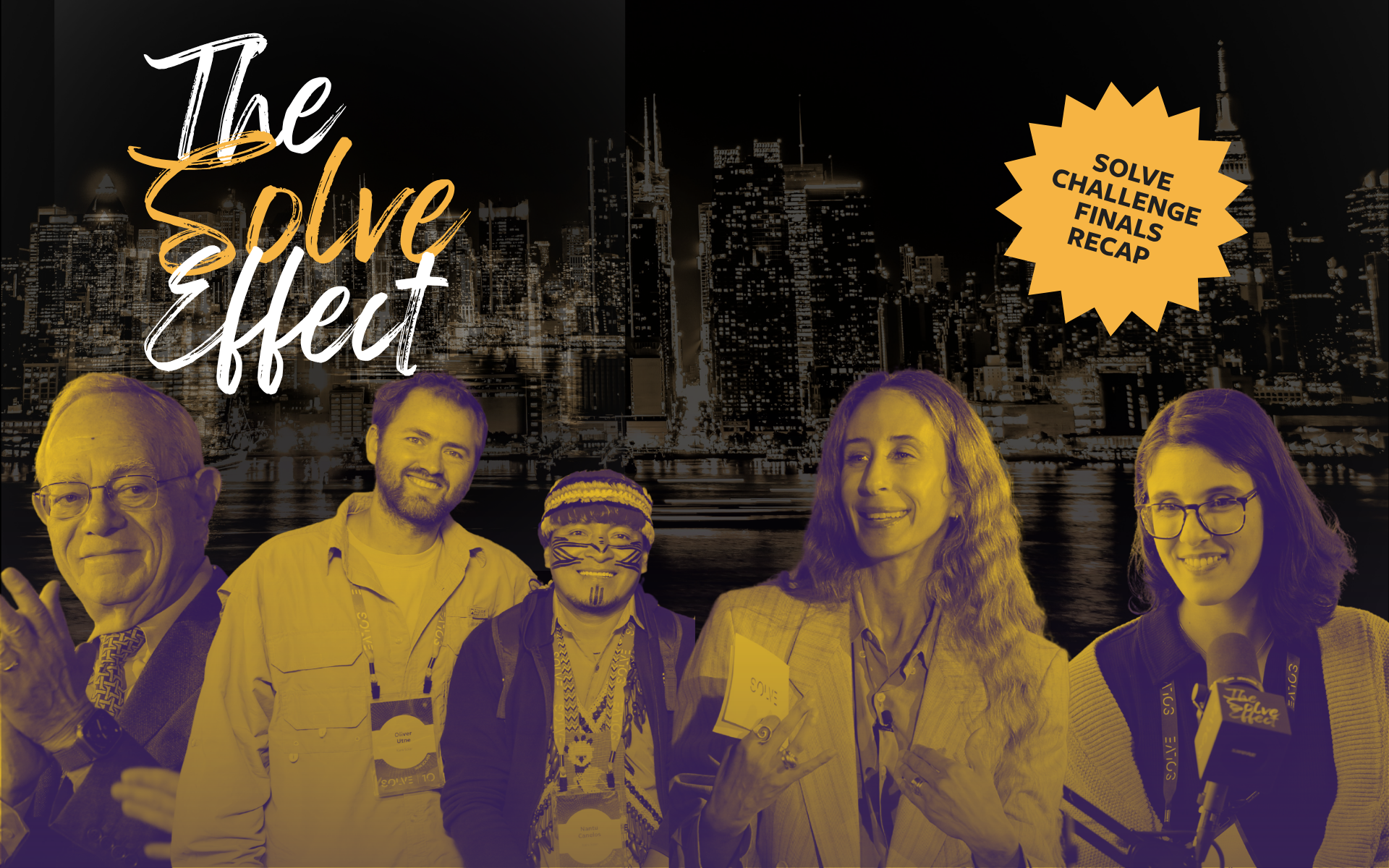
-
10 Years, 10 Solvers: From 14 Days to Under 60 Minutes—Revolutionizing Radiology Reporting with Rology
Ask Amr Abodraiaa what Rology looks like from the patient's side, and the answer is: nothing at all. Invisibility is the design goal. What the patient gets is the result.
-
Nabiha Syed on Human-Scale AI and What We Shouldn't Build