This is a transcript of Episode 22 of The Solve Effect, edited and condensed for clarity. Listen on Spotify, Apple Podcasts, or Amazon Music.
Show Notes
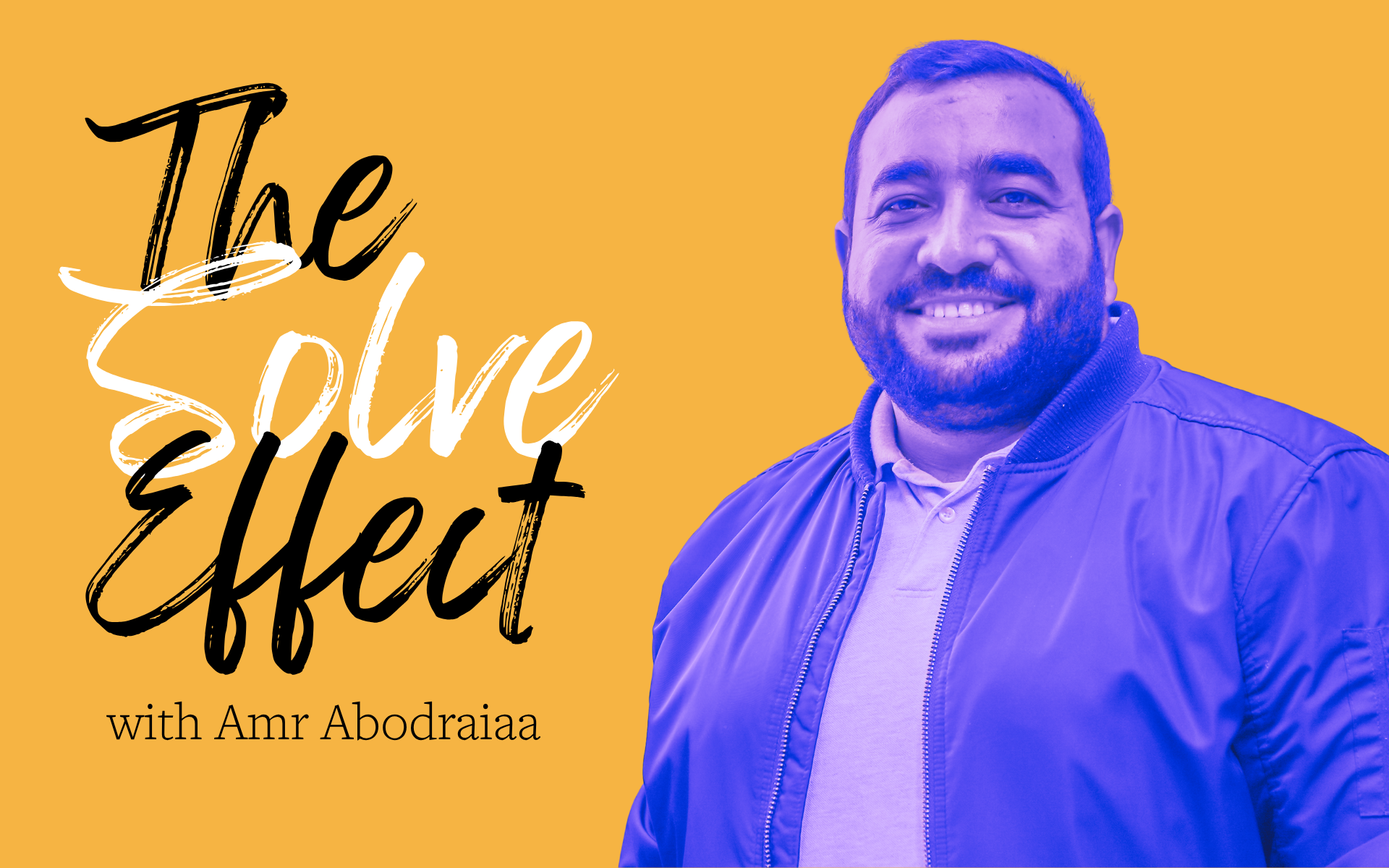
Amr Abodraiaa is the co-founder and CEO of Rology, a Cairo-based teleradiology platform that connects hospitals and clinics across Africa and the Middle East to a global network of radiologists. Facilities send X-rays, CT scans, and MRIs through the platform in under a minute with no new servers, bandwidth, or VPNs, and radiologists anywhere return a diagnostic report, cutting turnaround time on critical cases from roughly 24 hours to under 60 minutes. Now FDA-cleared, Rology reports across 13 countries and uses AI to check image quality, flag findings, and draft full reports for radiologists to review.
Rology was selected as a Solver in Solve's 2023 Health in Fragile Contexts Challenge for its AI-assisted teleradiology platform serving health facilities in Egypt and Kenya.
The Solve Effect is a production of MIT Solve, MIT's initiative connecting social entrepreneurs to the funding, partnerships, and expertise they need to scale.
Transcript
Hala Hanna
Welcome to The Solve Effect, where we highlight extraordinary people tackling the world's toughest challenges with bold, innovative solutions. I'm Hala Hanna, Executive Director of MIT Solve.
Solve is celebrating its 10th anniversary this year, and to mark the occasion, you'll be getting two episodes a month. One of those will be our special series with guest host Alexander Dale, Director of Global Programs at MIT Solve.
This series will highlight 10 Solvers from the past decade who embody the spirit of Solve: innovation, grit, resilience, and impact. Enjoy!
Alexander T. Dale
Hello, I'm Alexander Dale.
It's easy to think of diagnostic imaging as a hardware problem: get the X-ray machine, CT scanner, the MRI, into the hospital or clinic, add patients, and the rest follows. But sometimes the machines simply aren't there. Other times, no one qualified nearby can interpret the results.
Today's guest, Amr Abodraiaa, built a company to close that gap. Amr came to the problem as an engineer, not a doctor. In 2017, he and three cofounders started Rology, a teleradiology platform that connects hospitals across Africa and the Middle East to a global network of radiologists. This system has cut turnaround time on critical cases from roughly 24 hours to under 60 minutes.
Today we talk about what it took to build a network of trusted specialists, and what's next for Rology across the region.
Amr, welcome to The Solve Effect.
Amr Abodraiaa
Thank you so much.
ATD
Let's start in rural Egypt. So you said before that what led you to start Rology was a specific radiology center with no imaging IT infrastructure. Can you talk me through that moment?
AA
So actually, I started Rology mainly because of my previous experience in health tech specifically as an engineer. I realized that there is a radiology department and diagnostics in general facing a lot of problems. We shifted to not just building the next cool technology, but actually to build the next solution system for the problem itself.
ATD
So when you talk about you were building the next cool piece for radiology, that means that Rology then was starting at where do we innovate within the existing high-tech space?
AA
It's about not thinking as a technology for building the technology, but actually thinking of the technology as an enablement, the problem is not about the technology, it's about the medical service itself. But the moment you mentioned, it was after building our MVP, our minimum viable product, and we started to introduce this to some small clinics, radiology centers.
We met a hospital CEO, in a place called Delengat. And by total chance, I was talking with him about the radiology department. They used to have, very good machine, a flagship machine as a CT and MRI, and they have the technician who do the machine, but they don't have the radiologist.
By the end of every week, they started to collect all the scans on CD discs. And then they have a delivery guy who come by the end of every week, take all of this, travel to Alexandria, and so go to the specific radiologist.
ATD
So even more than 24 hours, we're at several days at least and probably a week to get a scan, get a result.
AA
Yeah, exactly. In this specific case, you might wait for something like maybe 14 days to get your results. So one week for your scan to be sent to the radiologist and then another week to bring this back from the radiologist. And this was in 2018.
ATD
Not that long ago.
AA
So it was like, what? I told him, okay, there's a lot of technology there that can help you on this. And he said, “Yes, there's a lot of technology, but they don't have the infrastructure to be able to run this kind of solutions. They need very heavy VPNs, very heavy bandwidths, it's extremely expensive for such a low-income community.”
I told him that, okay, we have a minimum viable product, which you can send the scan. Back then, we have been sending the scan in something like two hours.
ATD
Was that just a really low bandwidth amount or is the scan just very big? What took two hours about it?
AA
Usually the scans is very big, but back then our technology…it wasn't that mature. Today, our technology reach like 20 seconds up to 40 seconds to be sent. Back then, two hours for him; it was like a breakthrough. So it was like, wow, yes, I need this to be set up today.
ATD
So it was that we go from, it's not the physical piece, it's not even necessarily the diagnostician, it's getting the diagnostic output as cleanly, as quickly as possible, and that became the main piece. So tell me how that changed that MVP and what you did next to move to the next version with that focus.
AA
From this moment, we started to think about the system, how we can build the system, how we can build the network, not how to build the technology alone.
We started to think about, okay, the main problem that hospitals don't have the final diagnostic report. They don't care if they will get it through an email, through a WhatsApp, because they don't have it at all.
So we started to think about how we can build the system, not from a scan to report, but even from patient imaging, sending the image, enabling the radiologist from anywhere to view this image, and sending back the report. So, we started to think, how we can build every single step, until now, by the way, we have this kind of mandate that anything needs to be a zero setup cost. It needs to be a zero infrastructure needed. So whatever feature till today, after getting an FDA and we have been like in a totally different place and all of this stuff, this is one of our mandate to release any feature, we need to make all of our best that this feature go without any kind of infrastructure needed. So…
ATD
No one has to put in new broadband lines, no one has to put in a new computer.
AA
Exactly. No bandwidths, no servers, no VPN, no new anything.
ATD
So walk me through today, we'll make a time jump here. What does Rology look like from a patient and then a provider perspective for maybe a similar rural clinic today?
AA
Rology means for the patient access to health, access to diagnosis. We have a patient portal, which can help a patient have access for his own image, for his own reports, and actually even he can share it with any kind of other health care system or other clinicians. When it comes to the clinicians and hospitals, health care providers, it's about having this kind of access for diagnosis in a very convenient way and in a very affordable way as well. Reaching out the world-class standard when it comes to diagnosis with a very minimal effort, this is what Rology means for any health care provider overall.
ATD
The patient doesn't notice the difference aside from now they can access their medical imaging and information in their own portal in their own way. From a clinician perspective, they get much, much faster and seamless diagnostic information when they order something. To do that, one of the key pieces that you've built is a network of diagnosticians: radiologists that you can send scans to.
Tell me about building that network. You've had that balancing act of making sure that you have enough radiologists to service the hospitals and enough hospitals to meet the demand. Which one was tighter over the years as you've been building it up?
AA
Yeah, funny enough, it was like a sine wave, you know?
In the very early beginning, the problem was about demand at the hospitals because it's not easy to do the sales and to introduce the solution for a lot of hospitals. We started with a good number of radiologists.
And then once we started to have more demand, we went for a phase of lack of radiologists and started to onboard the radiologists. We have balancing this all over the time, but the only positive side about this problem for me, and I usually say that to my team, that thankfully there is no wave or the cycle of shortage we solve it or think about it as the previous one.
Right now, the productivity and the capacity of the radiologist working with us, it's way higher, a way higher, like three times multiplied with radiologist working on-premises in the hospital itself.
And so now, if we have a shortage, we don't need to bring three radiologists, but now we need to bring only one more radiologist for the same number of scans we had like three, four, five years ago. So this kind of building up the capacity for the radiologist and actually building the productivity for the radiologist is coming already from the AI perspective and how we help the radiologists through that.
ATD
You talked about how patients get access to their scans, their imaging. That means you're holding a bunch of that information. What benefits can you derive for broader public health or health awareness for the countries where you're active because you're holding hundreds of thousands or millions of scans? Are there other pieces that you can draw from that information?
AA
So first of all, we can use this data to increase the access for the patients when it comes to the diagnostic itself from the cumulative wisdom and the cumulative knowledge we can have through this kind of data. Starting from supporting the health care providers themselves, based on the analytics we have from this data. So if you are a health care provider, hospital, or a radiology center working with us, after three months, we started to provide you with analytics based on your data to increase the utilization of the machine.
ATD
So you have the ability then, because you have this data, to not even use machine learning algorithms or process all the data itself, but to make recommendations to the particular clinics and help them better utilize the people that they have on the ground as it is.
AA
So we use it for building up like AI algorithms, but it's not everything.
ATD
Let's talk about that AI piece. So pre-pandemic, which is when you started Rology, is also then pre-LLMs. And so when people talk about AI today, a lot of the times they're talking about large language models, GPT. But then you're doing a lot more with machine learning type pieces as well. So my understanding is that you started with using machine learning algorithms to help route scans to the radiologists that are best served to see them. But tell me how your use and your definition even of AI has evolved along Rology’s and then along society's redefinition of it, too.
AA
Let's say before LLMs and after LLMs, because we lived actually the two eras overall. We started to use machine learning, deep learning solutions, and we still use them when it comes to evaluating the image and actually reduce the retake for the patient.
ATD
We don't need someone to come back in and get a new scan.
AA
Yes, exactly. Now we have totally different AI solutions. We started to see one AI product, even if it's agentic or even if it's one algorithm, VLM algorithm, which can do like multi-purposes, not just looking for something, because this is what is usually there. Having the deep learning or machine learning who started to say this scan has a TB or not. This scan has a pneumonia or not, and all of this is done. So right now it's more of look into the full X-ray as an example and start to produce a final diagnostic report very similar to what the radiologist already provided and delivered to the clinician overall.
From our experience, we get the maximum value when we combine both. And also don't spend a lot of time in the workflow. Don't disrupt the workflow of selecting the AI tool, so it can be created automatically overall.
ATD
For our audience who probably knows LLMs, can you talk about what a VLM is?
That's vision language model, is that right?
AA
It's like an LLMs, but based on the images itself. So it's look into, so as you look into a text, large language models, it's like break down the text, but in VLMs, it's more about looking into the image and break it down into small pieces. And based on that, you can detect what kind of finding you have in this specific image.
ATD
I want to shift towards a little bit of your journey as an innovator and entrepreneur as well. So you were selected for Solve about six years into your journey with Rology. What's been most helpful about being a Solver and what do you wish you'd had earlier in terms of support as an innovator, as a founder?
AA
Solve, it came in this specific moment. It was a validation of the work I did on a personal level that could be recognized from a global entity like MIT Solve.
For the team and Rology in general, I think it was a very important point for the perspective. Before MIT Solve, we have served Egypt, we have served Kenya. I think back then we had something like 200 hospitals in Egypt and Kenya overall. And we have been planning to jump from a local player to a regional player.
So having MIT Solve as a full program for one year, it's very important to have this kind of time. It helped the full team back then to change the perspective from being an Egyptian player to being like a regional player.
ATD
Following that inflection point forward, you're now FDA-cleared, you're reporting across 13 countries. What do the next five years look like? More geographies, some additional approaches to AI, something different entirely?
AA
I think all of this.
By the end of 2027, we have this objective to be more of a global player when it comes to the access to diagnostics and radiology overall.
From an AI and intelligence perspective, we have this objective to have vertical depth when it comes to diagnostic solution but also horizontal AI when it comes to serve more of all the stakeholders in the radiology, because we believe that to increase the productivity in health care, you cannot increase the productivity for only one stakeholder like the radiologist, but you need to increase the productivity of the system itself.
ATD
You've talked about how much you had to grow as a founder as you went through this inflection point. If you could give your early career self a piece of advice, what would that be?
AA
Communicate more and communicate the vision more with everyone you are working with, even with your customers, with your co-founders, with your team. So communicate more when it comes to the end goal we have.
ATD
Final question for me. The world has a lot of hardship in it right now. There's a lot of hard things going on. There's also a lot of potential for the future. When you look at the future, and you have to tackle these big, hard questions of building better health care systems, do you lean more on hope or on courage for the future?
AA
I will relate to, one of the very, the good conversations I had with my wife, almost about the same thing, three to four weeks ago. And we have been talking about, thinking about our kids' future. Should we be having this kind of fear about the future and try to make them ready for that or what? I think you have to have both. So to wake up every day and get outside of the bed and the start, you need to have this kind of hope. Hope is the main driver, but courage is a mandatory to execute and to take one step forward to this hope, not waiting for them.
ATD
I appreciate that it's a conversation you and your wife have had recently, what that looks like. I certainly have some of the same conversation around my kids and how do we think about the future for them.
Thank you so much for this hour of conversation on your history and the story of Rology and where you're going next. This has been amazing.
HH
If you haven't yet, please subscribe to The Solve Effect wherever you get your podcasts.
This episode was produced by Bridget Weiler and Elisabeth Graham.
Audio engineering by Kurt Schneider at MIT Audiovisual Services.
Music by Tunetank.
For more information about MIT Solve's 10th anniversary, check out solve.mit.edu
Tags:
- Podcast